Episode transcript
Nuclear Hotseat #793
September 8, 2026
Deciphering What NRC Trick Wording,
Proposed Changes to Radiation Levels Really Mean -
Mary Olson, Generational Radiation Impact Project
Libbe HaLevy: [00:00:00] Nuclear radiation exposure. The Nuclear Regulatory Commission, the NRC, is tasked with keeping the public safe from radioactive emissions coming out of nuclear reactors. But recently, they proposed a serious weakening of safety standards, something strongly opposed by those groups and individuals who understand just how damaging this would be.
The initial comment period on this rule change has ended, but there are still questions being asked about this sudden move by the NRC to kneecap its safety standards. It takes a genuine expert, someone who has been working on the damage caused by radiation exposure for decades, to put this picture into focus.
And when she tells you-
Mary Olson: Why would you improve, quote-unquote, "modernize" radiation exposure and allow more of it when all the research we have shows [00:01:00] that radiation is more harmful than we thought? My work that shows that we've only been looking at male bodies, and when you look at female bodies, the damage is even greater.
We've only been looking mostly at adult workers, and if you look at children, the damage is greater. Why would they start releasing more radioactive pollution and allowing this type of exemption to the public exposure levels, except for the fact that we have this very, very wealthy overclass that wants its data centers to be powered by microgrids composed of new little nuclear power plants that some of them actually own these new companies that would make the reactor that would power the data site that they own.
And so the whole thing becomes this kind of quasi-public situation and quasi-very wealthy private situation. And meanwhile, the people living nearby are less protected.
Libbe HaLevy: Well, when biologist Mary Olson, founder of [00:02:00] the Generational Radiation Impact Project, explains not only what these new standards would mean, but how intentionally tricky wording hides the fact that the impact will be much greater than expected, you see how entrenched we all are in that awful, deadly, dangerous seat that we all share.
Nuclear Hotseat Theme: Nuclear Hotseat. What are those people thinking? Nuclear Hotseat. What have those boys been drinking? Nuclear Hotseat. The corium is sinking. Our time to act is shrinking, but our activists are linking.
Nuclear Hotseat. It's da bomb
Libbe HaLevy: Welcome to Nuclear Hotseat, the weekly international news magazine keeping you up to date on [00:03:00] all things nuclear from a different perspective. We're a show for people who know nothing about nuclear who want to know something, and people who know something about nuclear who would like to know just a little bit more.
My name is Libbe HaLevy. I'm the producer and host, as well as a survivor of the nuclear accident at Three Mile Island from just one mile away, so I know what can happen when those nuclear so-called experts get it wrong This week, we talk with Mary Olson, a biologist and founder of Generational Radiation Impact Project.
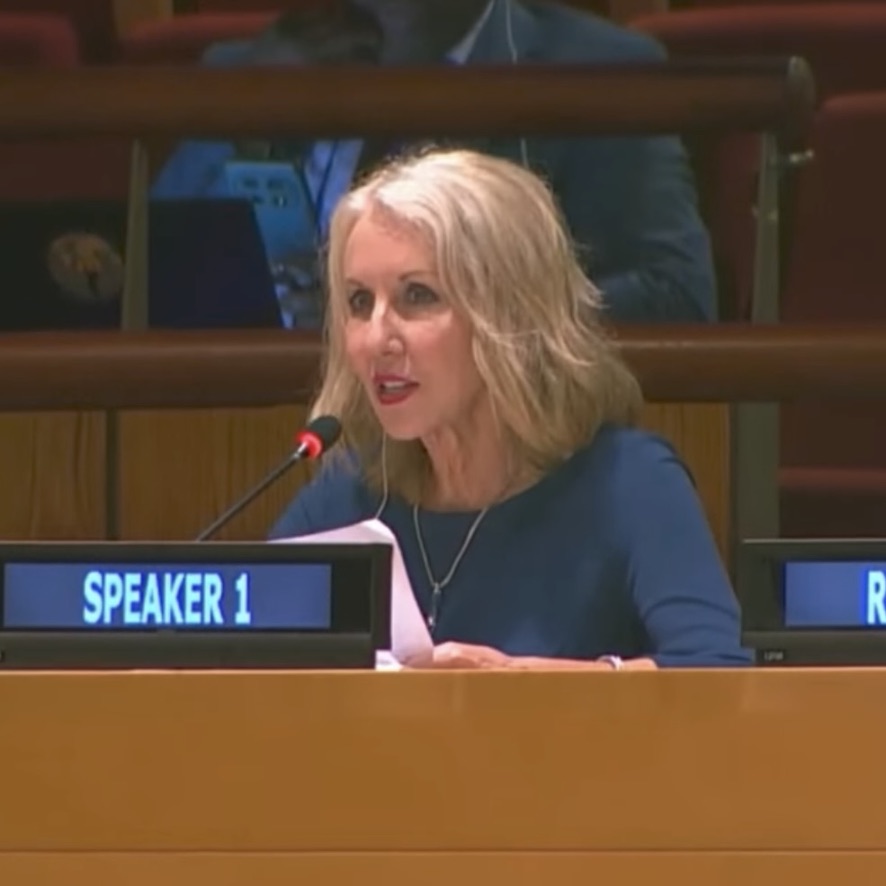
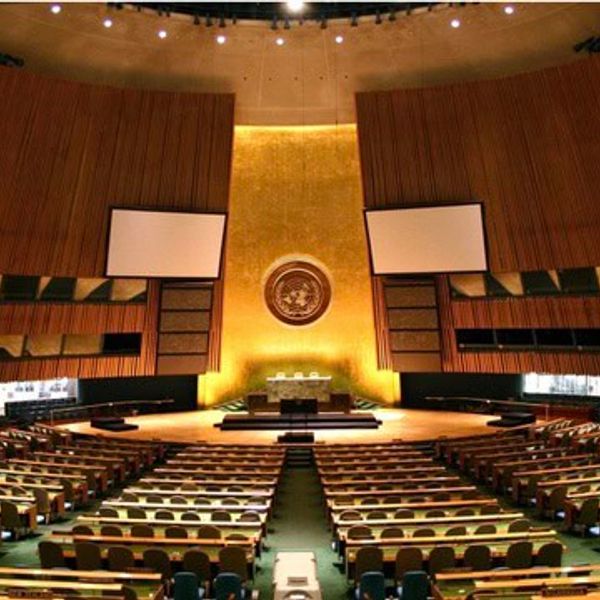
She reveals what the Nuclear Regulatory Commission's proposed change in radiation levels would mean, how the NRC hides the greater extent of radiation impact from reactors, along with strategies for further action to stop those radiation level changes from going through. We will also share with you Downwinder Mary Dixon's moving testimony, [00:04:00] given on September second at the United Nations for the International Meeting on Victim Assistance and Environmental Remediation.
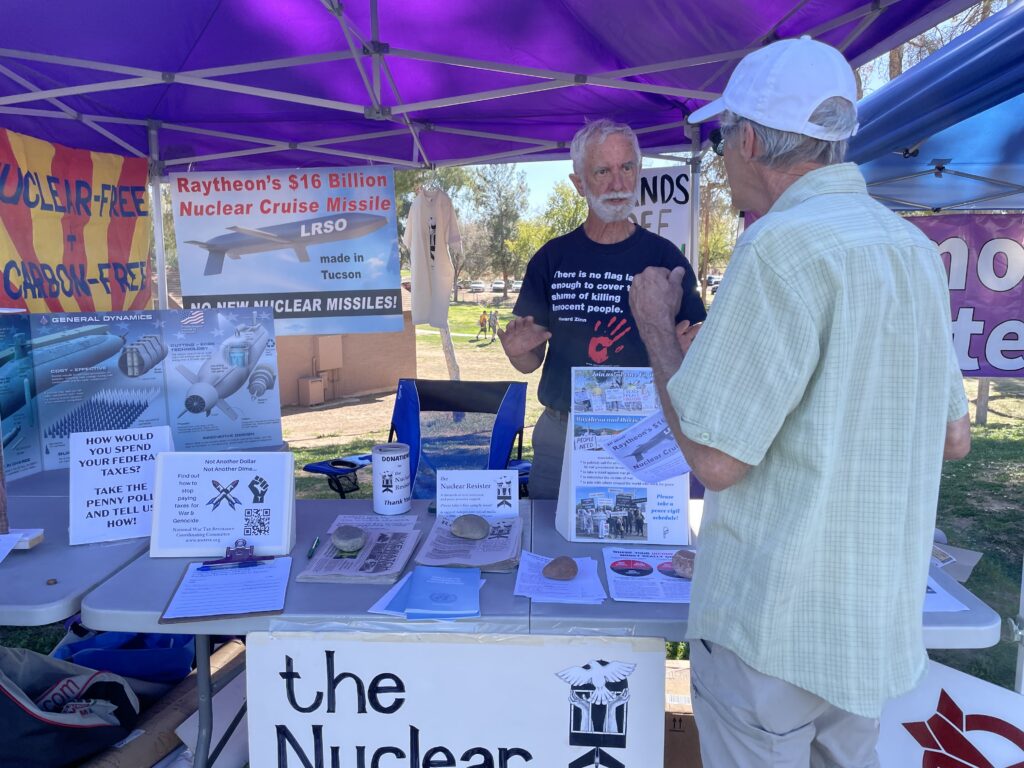
And we will have nuclear news from around the world. Jack Cohen-Joppa of The Nuke Resistor with another story from our shared history of activist resistance to nuclear reactors and weapons, and lots more honest and verifiable nuclear information, all of it coming up in just a few moments. Today is Tuesday, September eighth, twenty twenty-six, and here is this week's nuclear news from a different perspective.
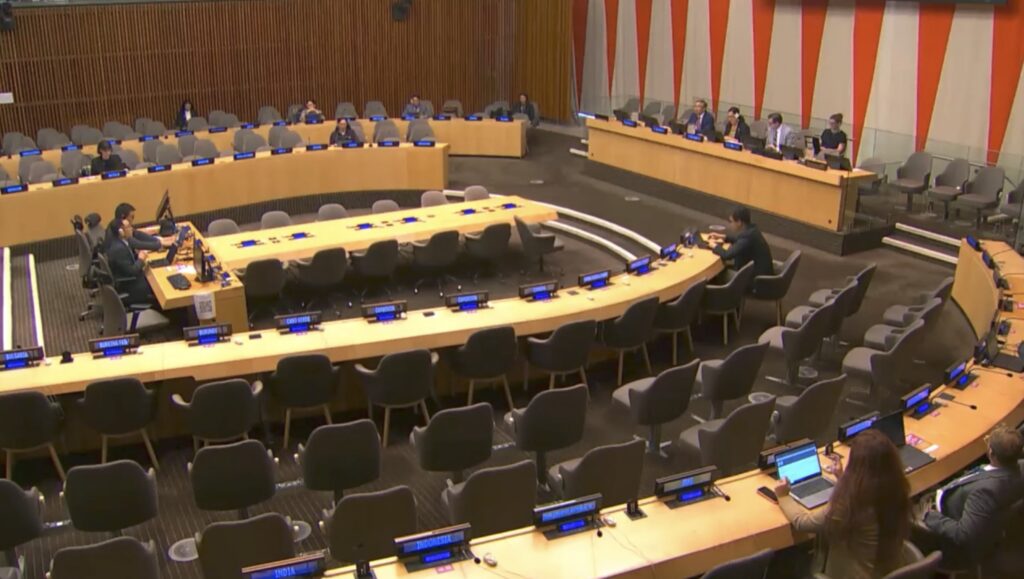
There are ongoing international meetings taking place on nuclear issues, with the United Nations recently holding the International Meeting on Victim Assistance and Environmental Remediation. It took place on September second, and one of the speakers was Downwinder Mary Dixon. She spoke movingly about how radiation from atomic bomb tests [00:05:00] impacted her, her family, and her life.
Speaker 10: It's an honor to be here today. Thank you. As she said, I'm an American Downwinder, a survivor of radioactive fallout from nine hundred and twenty-eight nuclear weapons detonated on our own soil for over four decades at the Nevada test site, just sixty miles from Las Vegas. I grew up in Salt Lake City, Utah, during the years of above-ground testing.
We ate vegetables from the garden, drank fresh milk from a local dairy, splashed in rainwater, and mixed sugar with snow to pretend it was ice cream. How were we to know that radioactive fallout was coming down with that rain and snow, contaminating our food and embedding itself into our bodies? We trusted our government when it told us there was no danger.
In my late twenties, I was diagnosed with thyroid cancer. Surgeons cut out my thyroid and surrounding lymph nodes. To destroy any remaining cancer cells, they [00:06:00] gave me radioactive iodine to drink. On my hospital door and wristband was the radiation symbol. I was the radioactive material. During a body scan, I watched my ovaries light up.
I never could have children. Years later, new tumors led to a complete hysterectomy I've been sliced, radiated, and scooped out. I've buried and mourned the dead, comforted and advocated for the living, and worried with each ache, pain, and lump that I am getting sick again. But I'm one of the lucky ones. I survived.
My older sister, like so many others, did not. Before she died at forty-six, we counted fifty-four people in our childhood neighborhood plagued with cancers and other serious illnesses, as well as infertility, children with leukemia and birth defects. My younger sister is now battling a rare cancer that has spread throughout her body.
Sadly, our stories are far too [00:07:00] common. As survivors, it is urgent that we keep them alive. When we talk about victims and assistance, compensation matters. It's not simply about money, because no amount can give us back our health, the loved ones we've buried, nor can it ease the sorrow we carry.
Compensation says, "We acknowledge what happened to you. We believe you. You never should have been harmed." It also carries something victims have waited far too long to hear: an apology. Medical support also must be part of meaningful victim assistance. The illnesses didn't end when the testing stopped.
People exposed decades ago are still being diagnosed. Cancers return, they spread, health complications arise. We live with a constant fear of what the next medical scan or test may reveal. Then we are saddled with crippling medical bills. We should not [00:08:00] have to struggle to pay for healthcare that the actions of governments made necessary.
We should also learn from the failures of existing compensation programs. In nineteen ninety, the US finally provided partial compensation to some Downwinders, but only within narrowly defined geographic boundaries and only for certain cancers. People often ask me, "How do I know I'm a Downwinder?" I tell them, "Because the US government says you are."
Government maps showed how far the jet streams carried the fallout. They knew it spread across the country far beyond the boundaries they drew. After pushing for years, we recently saw compensation expanded, but countless communities are still excluded by arbitrary lines on a map or because their disease isn't the right one.
We know radiation did not stop at county, state, or national borders. We know it didn't respect political boundaries and [00:09:00] justice cannot be confined by them either. For years, I've listened to the stories of nuclear survivors from across the US and around the world. I hear the same heartbreaking themes: disease, too many dead, secrecy, denial, and the burden of proof placed on the victims.
Victim assistance can begin to lift that burden. It can acknowledge what happened, compensate those harmed, and provide lifelong healthcare and screenings, and it can remediate the contaminated lands where people live, grow food, and raise their children. These are not acts of charity. They are obligations of justice.
We can't undo what was done to us at the hands of nuclear nations, but nations can decide whether we, the victims, continue to carry these burdens alone. They can also decide whether communities worldwide will again be deemed expendable, [00:10:00] causing new generations to suffer the same tragedies we have endured.
To me, the ultimate justice is to at last bring the age of nuclear weapons to an end. If I've learned anything from being a survivor, it's this: we all live downwind. Thank you.
Libbe HaLevy: Downwinder Mary Dixon, speaking at the United Nations International Meeting on Victim Assistance and Environmental Remediation, held on September second, twenty twenty-six.
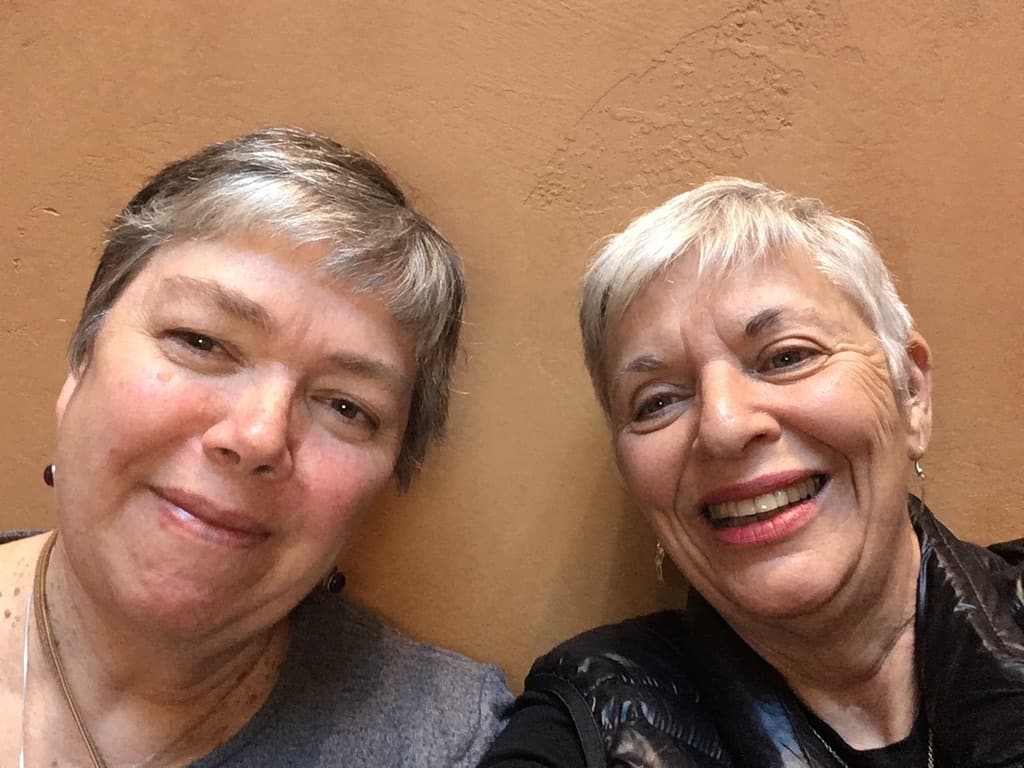
Having now heard how radiation exposure impacted one woman and her family will help bring this week's featured interview into sharp focus. We talked with Mary Olson. She holds a degree in evolutionary biology and has been an educator on radiation health impacts while serving nuclear-impacted communities.
Her research uncovered serious discrepancies [00:11:00] between the standards of how radiation exposure is measured against an adult male model versus how much more damage is actually caused to women and children, that young girls suffer the greatest radiation damage, and that this damage persists across their lifespan Mary founded Generational Radiation Impact Project, or GRIP, in 2017 to support and promote this information, and has presented her findings at the 2014 Vienna Conference on Humanitarian Consequences of Nuclear Weapons, in 2015 at the United Nations during the review of the Nuclear Non-Proliferation Treaty, and at conferences and symposia in Japan, Russia, and across Europe.
Note that when Mary references 200 kilometers, that's the equivalent, for those of us here in America, of 127 miles. I spoke with Mary Olson on September 7, 2026. Mary Olson, [00:12:00] it's always a treat and an honor to have you with us here on Nuclear Hotseat.
Mary Olson: Thank you so much for inviting me and having this time with me.
I love to talk to you.
Libbe HaLevy: We usually talk about your work with Generational Radiation Impact Project on the disproportionate impact of nuclear radiation on women and children, especially little girls. We will be addressing that again, and a new program that you have developed. But here, I want to talk with you about the Nuclear Regulatory Commission's proposed rollback of safety standards for radiation exposure.
First, tell us what it is the NRC proposed and what's wrong with it.
Mary Olson: They claim that they aren't making very many changes, but that is smoke, mirrors, fingers behind their back, outright lies, fibs, and every other form of dissembling, because they are absolutely increasing exposures to the [00:13:00] public, to people like you and me across this great nation, and particularly to workers, the people who are employed by not only nuclear power plants, but those are the big biggies, the energy-producing sites that are licensed by the Nuclear Regulatory Commission.
But there's all kinds of other places, like fuel factories for those nuclear reactors, and laundries that take the work clothes of workers and launder them. Very often they are in light industry areas, and I've even known them to be sited in residential areas doing radioactive laundry licensed by the Nuclear Regulatory Commission.
So it's a full range of different operations that carry that license. And I want people to now hear me say clearly everything I'm about to describe about the changes in relation to the rule pertain to each license. And so we're gonna be [00:14:00] talking about people who are affected by more than one license before we're done.
So each license is what the rule is written for.
Libbe HaLevy: For clarity, is a license for an individual reactor, or is it for a site that may have more than one reactor?
Mary Olson: In general, it's for each reactor, but there are actually some exceptions to that. The nuclear history is long, varied, and full of exceptions, so we can't ever say it's, oh, one way.
But in general, each reactor has its own license that you can look it up, and there are different years. They were constructed at different rates. Some of them came online ahead of the others at the same site, and so of course it's a separate license. So what's the claim? The claim is we're keeping the general public rule the same of 100 millirems a year from a license to the general public.
Okay, but [00:15:00] now they're offering the opportunity for the holder of that license to ask for an exemption for unspecified period of time, and to an unspecified level of exposure. This means that we have 100 millirems unless there's an exemption, and there's no instruction as to whether the public will be notified.
There's no indication as to how long this might last, or again, just how high the exemption could go. We are seeing changes in the proposed types of facilities. Instead of these big, huge, uh, you can see 'em from a great distance nuclear power reactors, we're now s- talking about small facilities that might, in fact, in some cases fit in a ranch house.
In other cases, might even fit in a phone booth. The microreactors are things that are gonna end up on satellite orbiting structures [00:16:00] above our planet in near space for military activities powered by microreactors, possibly taken to the moon for use on the moon to power activities there. All kinds of changes in the infrastructure are changing the ways in which 100 millirems per license begins to add up.
So that's what's going on in terms of the general at the fence line. The next thing which is an out and out increase is the amount of effluent, meaning radioactive pollution a site is allowed to emit. Radioactive pollution can be either liquid into water, or gaseous into air, or vapor into air, and they are going from 10...
Now here's the thing, why would you have an effluent in millirems? That's the exposure to a person. It should really be in a measurement per unit of water or per unit [00:17:00] of air that you could actually verify. But they are still keeping it as a millirem exposure to a human being, and they're going from 10 of those per year to 25.
So there's no way that we aren't gonna be seeing a lot more radioactive pollution coming off of every different type of licensed site. And this now includes medical sites that use radionuclides, not just X-rays, where they're actually using something that they would either administer as a pill or inject into a patient.
So each of these sites can now have that much more effluent, either through a stack on the top of the building or discharge into water, into sewer, into groundwater.
Libbe HaLevy: So what you're saying is, with this shift in regulation, there's a much higher level of exposure for any and all of us from reactors, from discharge Even [00:18:00] from medical facilities
Mary Olson: Every single Nuclear Regulatory Commission license is going to more than double the amount of radioactive pollution that is allowed.
And again, these licenses are so varied. It could be a place that repairs pumps and receives pumps from a nuclear power plant as well as some other kind of pump, and so it's a radioactive site, so it has a radioactive license from the Nuclear Regulatory Commission, or from a state that's operating under the authority of the Nuclear Regulatory Commission.
So this is the commercial side. We're not really talking about the production of nuclear weapons, although there is some influence back and forth between the Department of Energy and the Nuclear Regulatory Commission on these changes, in part because the Department of Energy is getting involved in these small new reactor designs, in the okay of them, sort [00:19:00] of pre-certification for the Nuclear Regulatory Commission.
And this is all part of the data center picture, okay? So we start being able to tie the motivation and the push for this. Why would you improve, quote unquote, "modernize radiation exposure" and allow more of it when all the research we have shows that radiation is more harmful than we thought? My work that shows that we've only been looking at male bodies, and when you look at female bodies, the damage is even greater.
We've only been looking mostly at adult workers, and if you look at children, the damage is greater. Why would they start releasing more radioactive pollution and allowing this type of exemption to the public exposure levels, except for the fact that we have this very, very wealthy overclass that wants its data centers to be powered by little microgrids composed of [00:20:00] new little nuclear power plants, that some of them actually own these new companies that would make the reactor, that would power the data site that they own?
And so the whole thing becomes this kind of quasi-public situation and quasi-very wealthy private situation. And meanwhile, the people living nearby are less protected. Less protected
Libbe HaLevy: We've been talking about in general the public here. What about the workers, the people on site?
Mary Olson: It has been one standard of five rems.
This is each millirem is one thousandth of a rem. So 1,000
millirems times five is what workers have traditionally been exposed to per year. There was definitely a push through something called As Low As Reasonably Achievable, or ALARA, to stay below that five rem limit. So in the United States, in [00:21:00] fact, most nuclear workers have been more like two rems a year, with exceptions up to five.
Now, with the new, and we have to s- emphasize this is a proposed rule. It's not yet final. It's been out for comment. And the proposed rule says, okay, it's not five per year, it's 25 per five years. So our reporting period is going from one year to five years, and they are committing to no more than 10 rems in one year.
But that's a huge change because they're getting rid of the ALARA policy. The As Low As Reasonably Achievable was a mandate to drive exposures l- as low as they could without spending an arm and a leg more than they wanted to. They were allowed to put the word reasonable in there. But it was a culture of safety to stay low.
And now, if a [00:22:00] worker does not utilize the full five rems, it becomes applicable to that five-year period, and they're basically exposing to the max now if they so desire.
Libbe HaLevy: In other words, it's kind of rolling it over into the following year, or the following years.
Mary Olson: I call it the to-go box. You have five REMS a year, or 25 REMS over five years.
So if you have a year at three REMS for a worker, two REMS go in the to-go box, and they can be applied to any of the coming years. How they do it is they look at the previous four and then determine the fifth year. And they're saying that they can give up to 10 REMS in that fifth year if you have enough previous exposure that was unused.
So exposure is now exposure to the max, not the min.
Libbe HaLevy: To give people a sense of how dangerous this could be, at what level of [00:23:00] exposure is health impacted, be it cancer or heart disease or autoimmune? Is there an understandable and accepted standard for understanding what this level of exposure means?
Mary Olson: Okay, there's two answers, and I want to get through both of them because they are answers that pertain to different assumptions.
So the first assumption is the one that is verified by decades of peer-reviewed research, which is that at any level of radiation, there is the risk of even fatal cancer, and these are outcomes that depend on the damage of a single cell. So the exposure amount, as you get a higher and higher exposure, the probability goes up of that fatal cancer, but the level of the outcome does not change because fatal cancer is fatal cancer.
And you can get [00:24:00] a fatal cancer with one cell and one radioactive emission. It certainly does not happen every time, and cells have repair mechanisms, and so it becomes a probability factor, and that's where we get into the word risk. But it exists, and for any level of radiation exposure, there is the risk of fatal cancer, non-fatal cancer, loss of pregnancy, loss of fertility, anything that hinges on a single cell being damaged.
So that is there. Now, there's a second level of answer that is tied much more to people being paid, having some amount of disclosure, being willing to take an additional risk to have the job. And in that picture, my friend Dr. David Richardson, who's at the University of California, Irvine, did a back of the envelope estimate that he and I were having a conversation.
He gave me the [00:25:00] permission to use this, and he says that if you have a 30-year career at this new level of radiation exposure that's being proposed for workers, this up to 25 rems in five years, and, you know, wringing the towel out every year and applying the leftover to the coming year, that approach will result in cancer, one in every five males and one in every four females That's on top of the basic rate of cancer in our society, or that someone would have from a non-radioactive job.
This is the additional risk associated with having this program. So one in five for males, one in four for females.
Libbe HaLevy: This is a devastating prospect.
Mary Olson: Yes, it absolutely is a devastating prospect. [00:26:00] And quite frankly, it was seeing this coming that a bunch of organizations formed a coalition to stop radioactive pollution, with a dedication to get as many comments into the Nuclear Regulatory Commission as we could.
We have yet to do the forensics on the 2,080-some comments that are even reported. There may be more that they didn't manage to report into the docket. So we don't know win, lose, draw on who got the most, 'cause certainly the industry was supporting some of these ideas, and there may have been even industry people saying, "Well, we don't like this 'cause it's not bad enough," you know?
But we're pretty sure that we drove the number, whether we were exactly... We don't know yet how many were people opposing it for health and public health reasons. But 2,000 comments ain't shabby. We did manage to get the full participation, and the sense that the world is watching. That was our goal. The [00:27:00] world is watching.
Libbe HaLevy: So there was public response. How remarkable is it to get more than 2,000 comments on a proposal from the NRC?
Mary Olson: Well, 15 years ago there was a challenge to this very same radiation rule. There were people who said radiation's good for you, we shouldn't have such tight regulations, rewrite your regulations.
And that rule making had about 75 or 80 comments.
Libbe HaLevy: This is magnitudes higher.
Mary Olson: Yes, orders of magnitude higher.
Libbe HaLevy: We'll continue this interview with Mary Olson of Generational Radiation Impact Project in just a moment, but first, you already know why Nuclear Hotseat matters. Every week, the nuclear industry gives us another reason to pay attention.
New reactors, radioactive waste, uranium mining, reactor accidents, nuclear weapons, and now the push to convince us that we need nuclear power to [00:28:00] feed the enormous appetite of AI. Here's the part I want you to remember. If Nuclear Hotseat isn't here to tell you about it, who will? Mainstream media rarely has the time, the expertise, or sometimes the willingness to dig into what the nuclear industry is actually doing.
That's what Nuclear Hotseat does. And no surprise here, we don't take money from the nuclear industry. Nuclear Hotseat exists solely because of you. It's produced by a nonprofit and runs on donations from listeners who believe that people have the right to know what's happening with nuclear technology and what those decisions can mean for our health, our environment, our communities, and our future So I'm asking you to do something very simple.
If Nuclear Hotseat has ever informed you, surprised you, helped you understand something you couldn't get anywhere else, or simply made you [00:29:00] feel that you're not alone in paying attention, please make a donation today. It doesn't have to be a lot. $5 helps. $10, $25, or more. And if you can become a monthly donor, even at $5 a month, that gives us something incredibly important, the ability to know that we'll have the resources to keep producing the next episode.
So please go to nuclearhotseat.com and hit that donate button. If you use Zelle, you can send your donation directly to info at nuclearhotseat.com. Nuclear Hotseat is a 501c3 nonprofit, so your donation is tax deductible to the extent allowed by law. Whatever you can give, I am grateful because when you donate to Nuclear Hotseat, you're not just paying for a podcast.
You're helping keep an independent voice on nuclear power, weapons, radioactive waste, and the nuclear [00:30:00] industry's newest schemes on the air. And right now, we need that voice more than ever. So please go to nuclearhotseat.com and donate today. Thanks for listening, and thanks for caring. Now back to this week's featured interview with Mary Olson of Generational Radiation Impact Project.
Mary Olson: Now the next piece is going to be to see what the final rule is. And we have some concern that the final rule is actually going to be much worse than the proposal, that if they can rely upon industry comments in that docket and come out with something even worse, we get 60 days from the publication of the final rule, which is currently forecast for mid-February 2027.
We get 60 days after that to file an appeal. So we need to put together a legal team. And more than that, we need some money to work with because there's court fees [00:31:00] and not every attorney in the world is pro bono. And some of the amazing attorneys that we've had over the years working for public interest organizations are gone, like as completely gone or retiring or retired.
And so we're relying on the younger generation to rise, but they are entering a new realm and they need to be supported as they do so.
Libbe HaLevy: From your comments, it sounds like you're making the assumption that nothing that we have said, even if we are in the vast preponderance of comments against this, nothing we have said is going to turn them around and turn them away, and potentially they can make it even worse.
Do you think we have any chance of influencing this decision?
Mary Olson: Yes, I think that comments matter, if that's the question. They do matter. I think there is some amount of cynicism in our executive branch [00:32:00] and its functioning today. It was a single executive order that set in motion 23 concurrent, I think it's actually up to more like 24 concurrent, rulemakings to meet the goals of Executive Order 14300, which basically said revolutionize the whole Nuclear Regulatory Commission to support the immediate development of nuclear energy, which is not its original mandate.
Its original mandate is to be an independent watchdog regulator protecting the public health and safety under the authority of the Atomic Energy Act and created under the Energy Reorganization Act. And then there's a bunch of other federal laws that, not being a lawyer, I can't reel them off, but I'm very much hoping that we will be able to take ch- a challenge into court.
And sometimes you win in court, sometimes you don't. But if you don't go to court, you haven't done what's known as exhausting the [00:33:00] remedies. And the reason one cares about that is because the ultimate goal, I believe, has to be a complete turning back of what's happening under the Trump executive orders, and that will be the job of a future Congress to do.
And the only reason I believe it's possible or viable is because the Nuclear Regulatory Commission went down a similar road back in the late 1980s and 1990 with a program called Below Regulatory Concern. It took breaking every record on comments into the dockets of the Below Regulatory Concern comment periods.
It took Public Citizen Litigation Group, um, taking up the cause and, and filing a federal appeal on the Below Regulatory Concern, which would have Taken radioactive waste, about a third of the so-called low-level waste would've been [00:34:00] completely deregulated, could've been dumped in any place, in any ditch, in any landfill, just treated as if it was non-radioactive, and allowed to be recycled into consumer products.
So believe me, a lot of people were really pissed off about this, to the point that we got 14 states to actually pass their own laws saying if these wastes were deregulated at the federal level, that they would continue to be controlled at the state level. And so it turned into a big, huge p- hoopla. It got into Congress, and it was Bush Senior, with an energy policy act, that the amendment was added to tell the Nuclear Regulatory Commission to revoke the Below Regulatory Concern policy.
So when we brought up Below Regulatory Concern, even 26 years later, it got everybody's panties in a wad at the current Nuclear Regulatory Commission. Now, they claim they're not doing it, but I'll tell you [00:35:00] that this 25 millirems for effluence, it's the same difference, it's just not solid waste. It's the stuff that's going into ponds and into streams and into rivers and into lakes and into even oceans, into the Hudson River, into the Mississippi River, into all of our great, enormously important environmentally precious riverine systems, are now gonna be subject to two and a half times more radioactive pollution being released than last year.
Next year, if this is implemented, it will be that much more than last year. So this is not a small matter, and I think Congress can hear it, and I think Congress, even the recent Congresses, have decided that people who were downwinders should have compensation, and they expanded and extended the Radiation Effects Compensation Act in the big beautiful bill.
So I don't think it's out [00:36:00] of question that, especially if NRC makes this a worse rule in the final rule, that we could have some purchase in the legislative branch.
Libbe HaLevy: When you were talking about 1990, you raised the specter that individual states were saying if this goes through on the federal level, they will pass state laws that would prevent this from happening.
Is that a pathway that we could take if necessary should the NRC kind of go, "Wait till you see this one. We're gonna make it even worse"?
Mary Olson: The effluent, it's called, is either liquids released to the waterways or gases and vapors released to the air. And so I think at the state levels, there will become this real question about is nuclear clean energy?
Should they have the credits for having no emissions? Aren't these [00:37:00] emissions radioactive emissions, radioactive pollution? Why should they get clean air credits? Why should they get climate credits when they're actually more than doubling the amount of radioactive pollution coming off these sites? I think a bunch of states would answer that in different ways, and I'm focusing on nuclear reactors here, but it's not only nuclear reactors.
It's every NRC licensee, and I think that that's so important that people can be affected by more than one license. And so then it's not 25 millirems of Impact. If it's two licenses, that's 50 millirems of impact. It's not 100 millirems a year of the individual exposure total, it's 200 millirems a year of the individual exposure total because it's not the individual person, it's the individual license.
So multiple [00:38:00] licenses mean multiple exposures means additive limits, and people don't talk about this because it's the little secret under the table.
Libbe HaLevy: There was a recent Harvard study by Yazan Al-Wadi which joins a growing body of scientific information and data that has been compiled on the impact of radiation releases from nuclear reactors on the health of people who live in proximity to them.
Has the NRC acknowledged this new, highly credible, highly reported-upon report, and if so, do you think it has or will have any impact on their thinking?
Mary Olson: Well, the NRC has a whole chorus of apologists who are saying that you can't claim that proximity is causation. They're saying it is correlation. And Al-Wadi is very majestic in his [00:39:00] acknowledgement that he's not able to bring causation with these studies yet.
But the yet is that they are closing in ever more precisely on not only distance and proximity, but saturation of the environment with radioactive hot particles. And alongside these elegant statistical studies, which I wanna stay with for a moment, but just to say, in the Massachusetts case of looking only at the Pilgrim reactor, they have established a distance from the reactor and a density of hot particles, so the closer you get to the reactor, the more hot particles there are in places like attic dust and running cars with air filter that's put in and run for a specific amount of time to emulate the lungs of a breathing organism.
Other ways to find the density [00:40:00] of radioactive exposure are novel and interesting, including even shoes and shoelaces. So this proximity factor is now being applied not only to the death and disease, but also to the things that can cause the death and disease, and more papers are in the pipeline on that.
I'm not gonna say anything more because I'm not the author. But one thing I do wanna say about this question of what has Yazan Al-Awadi proven? And absolutely what he proves is that the larger number of people in the Northeast where there is a high concentration of nuclear power reactors, he's not looking at every licensee, he's only looking at nuclear power reactors.
But in the northeastern United States, and indeed nationwide, many people, the majority of people in the northeastern region, are affected [00:41:00] by more than one reactor site, as defined with a GPS system looking at a 200-kilometer circle around each individual address where someone had a cancer. He also did a paper on total death from all causes.
And he absolutely proves that individuals are being affected by these circles of 200 kilometers from each reactor from multiple sites. So my contention that we're only talking about a single license gets heightened by the fact that Awadi shows that multiple licenses impact single addresses. He proves that.
And if you're proving that, then you have to understand that it's been a charade to say that we're governed by regulations that say 100 millirems per year. No, they say 100 millirems [00:42:00] per license, and if I'm affected by three licenses, that could be as much as 300 millirems a year and 75 millirems in effluent.
And so we have to start saying the emperor has no clothes, and the magician is distracting us with all kinds of things, but we're not seeing the truth of these regulations, which are that they really truly are basically bag limits for a very dangerous set of operations to impact the public and produce even death legally.
And so if you're producing death legally from one license and suddenly you realize, "Oh, but I'm affected by three licenses," well, that does triple your risk. It does
Libbe HaLevy: Is there anything that we haven't covered about this that you believe it is important to bring up now?
Mary Olson: Yeah. Another change in the regulation is they're letting the [00:43:00] licensee bring their own kit with the dosimetry they wanna use.
And so however they arrive at showing that they're gonna expose people to 100 millirems a year is fine. But what the NRC doesn't tell you is that on its side of the fence, it's still gonna use reference man. It has to, because it has to have a point of comparison from one site to another site to another site that's constant.
Okay, I'm not against a reference individual, I just don't like one that doesn't reflect female bodies and does not reflect children.
Libbe HaLevy: Briefly explain for people who might not be familiar with the concept who and what reference man is.
Mary Olson: Reference man is a set of parameters that define a model who is the target for the exposure of any amount of radiation.
So the 100 millirems a year, the 25 millirems a year, an accident that has just released X [00:44:00] many curies or massive numbers of curies, all of those are measured on an individual who has to be consistent to be a reference. And this is so you can compare one thing to another thing, apples to apples throughout the whole system.
You have to have this one reference. ICRP, which is the International Committee on Radiological Protection, put out a bunch of parameters for an individual who is a man, he is an adult, he is a specific height, a specific weight. We know what temperature he lives in, so we know how fast his respiration is.
He's defined as white. He's defined as living in a Northern European or North American urban habit and habitat, which means he gets his food from the grocery store. He drinks regulated water. He lives in a frame house. He sleeps so many hours a night. He [00:45:00] recreates outside, but other than that, he's indoors.
And so he's a very much of a hothouse flower compared to any front line community, whether you're talking about men, women, or children, which reference man is not a woman and he's not a child. So we, being myself, a woman, and our children are invisible to the decision-maker, to the policy maker, because they're never told about reference man.
They're never introduced to him. They never come to understand that all of what is happening in the regulatory sphere is on an adult male living in an industrial lifestyle where he is virtually protected from a lot of the factors that impact people outside of that frame. So it's a lie that they now have dosimetries that are distinct and might include someone besides that reference [00:46:00] man, because when they take the whole thing back to the regulatory frame, it is reference man.
And so we continue to be in that white adult male world without reference to the fact that everybody else is invisible.
Libbe HaLevy: And also it's been proven more vulnerable to radiation than this male standard is.
Mary Olson: When we take the data on the exposure of very young female children and compare that, the outcome of their exposure over a 60-year time period, the amount of cancer incidence amongst the young female people compared to the male people 25 to 30 years old who underpin the reference man model, there's a factor of seven times more cancer amongst the females who grew up from being [00:47:00] those youngest girls who were exposed.
So it's not a small difference. And even when you compare the youngest girls to the youngest boys, there's twice as much cancer amongst the females over the 60 years as there is amongst the males. So doubling in the same age times seven compared to reference man
Libbe HaLevy: All of which is very upsetting information.
And given that barring a miracle of conscience that comes down from the sky and splits open the brains of the people at the NRC, we're probably going to be facing this change or comparable or even worse change in radiation standards. Between now and when the substance hits the fan, what do we who oppose this change do?
What can we do now that the comment period is over for the NRC, but we [00:48:00] still have more to say and we need to be able to express it? What do you suggest that we do?
Mary Olson: The new coalition is called Protect Better, and it's protectbetter.org. And you can support the legal challenge by making a donation of any size.
Worse case, we need a couple hundred thousand dollars. If you know somebody with a grandmother who can spare that, that's what we need. But $10 here and $10 there, and a lot of people listening, it adds up. So I encourage you to really consider throwing some change in the begging cup of protectbetter.org.
I'll just mention that the fiscal agent is Physicians for Social Responsibility, a well-known, long-standing national organization with people in the healthcare industry and expertise of medical stature founded it and continue to support it. So we're new as a coalition, but if you look at [00:49:00] the lineup of groups, including Generational Radiation Impact Project, in my 35 years of experience, we are deeply committed people.
So support that legal appeal through that. The second thing is support everything that has to do with women helping women, supporting women, supporting the people who need to come and take over these jobs. These are jobs. These are real jobs. We're gonna have this radioactive waste that we've already created for the rest of time.
We need people to have the jobs, but we need to have parity in the decision-makers. I'm not saying we need a lot of women to go out and handle radioactive waste. I'd rather you didn't. But we need you to be at the level of the decision-making. We need to have women stand up and say, "This is our bodies. This is our babies.
This is our future generations, and we are not gonna leave it to people who seem to think that Reference Man is good enough." That is [00:50:00] just not what we're gonna do.
Libbe HaLevy: Mary, of course we will list protectbetter.org with a link on the website, nuclearhotseat.com, under this episode. It is always breathtakingly intense to listen to what it is you have to share.
I cherish and relish your appearances on this show, and I wanna thank you for jumping on so quickly today to be my guest on Nuclear Hotseat.
Mary Olson: I love you, Libby. I love the show, and I'm honored to be here.
Libbe HaLevy: Mary Olson of Generational Radiation Impact Project. That website is radiationproject.org, and the website of the new coalition fighting against the changes to the NRC's radiation levels is protectbetter.org.
We'll have both linked on our website, nuclearhotseat.com, under this episode number 793.[00:51:00]
Activist Shoutout: Activist Shoutout
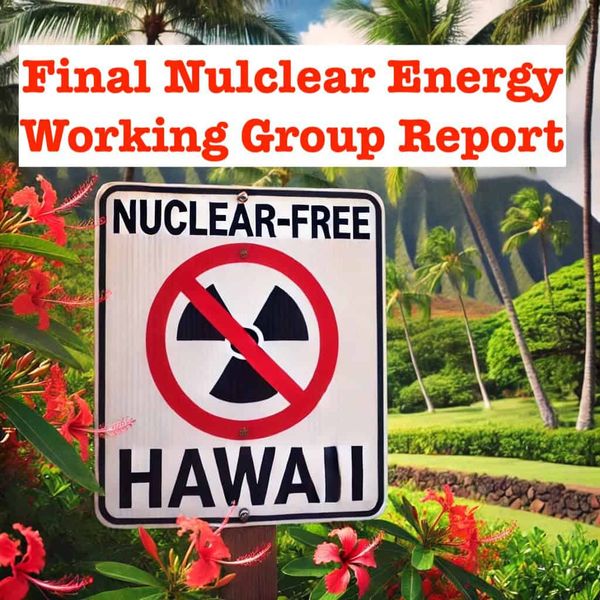
Libbe HaLevy: Once again, it's milk and cookies time with the best nuclear storytelling anywhere. Did you know that in 1981, the Hawaii County Council declared the Big Island to be a nuclear-free zone? Nonviolent direct action by a trio of aquatic activists revealed that the politicians didn't really mean it. Here with another story from our shared history of resisting nukes is Jack Cohen-Joppa, co-coordinator of the Nuclear Resister.
Jack Cohen-Joppa: When is a nuclear-free zone not a nuclear-free zone? When the U.S. Navy gets a pass. Nuclear-free zones were originally multinational agreements to prohibit nuclear weapons from certain regions, such as Antarctica and Latin America. Then, in the 1980s, a movement arose of municipal [00:52:00] nuclear-free zones, where citizen initiatives or political leadership in at least 200 jurisdictions in the United States and abroad formally banned nuclear weapons activity from their boundaries.
While largely symbolic, nuclear-free zones were unmistakable expressions of public opposition to the nuclear arms race then at its height. As the slogan goes, think globally, act locally. In February 1981, the Hawaii County Council, that's the Big Island, unanimously resolved to prohibit nuclear materials from entering the county.
But the annual International Festival of the Pacific each year invited a U.S. naval warship, often nuclear-capable, to visit the civilian harbor at Hilo, the Big Island's largest city. Despite the inevitable protests, the county took no enforcement action. By the summer of 1983, local peace activist Jim Albertini had had enough.
If the county wouldn't enforce the ordinance, he would, and [00:53:00] promised to block the next Navy port call. Festival sponsors pushed the council to exempt the Navy from the ordinance just days before the frigate USS Aulet, a submarine hunter potentially armed with nuclear depth charges, was due to arrive. The Coast Guard declared a martial law safety zone around the vessels.
Amidst the hoopla of hundreds gathered on the docks as the warship sailed into Hilo Bay, Jim Albertini, Jim Snyder, and Warren Weinman dived in and swam into its path. Treading water, they waved their hands, signaling the ship to stop. The Coast Guard soon pulled them from the bay, and they were charged with a felony.
Eventually, they stood trial before visiting federal judge Spencer Williams, a twenty-nine-year Navy veteran. He forbid the defendants to speak about nuclear weapons and nuclear-free zones. When confusion over the wording of the charges led the jury to ask, "What is the charge verbatim?" attorneys [00:54:00] suggested they be given a copy of the three-page indictment.
"I don't care what the jury wants. They'll get what I give them," he said, and he sent the jury a single sentence: "Knowingly and willfully violating a Coast Guard safety zone." The men were quickly convicted. Albertini, the alleged ringleader, got a three-year prison sentence from Judge Williams on the day before he returned to his regular bench on the mainland Addressing the court, Jim said, Our action was a restrained, nonviolent, symbolic effort to uphold the spirit, if not the letter, of Hawaii County's nuclear-free ordinance.
I had no illusions of using my body to create a physical counterforce to the physical force of nuclear weapons. On the contrary, the objective of the human blockade was to offer a symbolic response to nuclear weapons from the spiritual depths of our souls. Soul force versus nuclear force. The symbolic blockade was undertaken only after all other [00:55:00] good-faith efforts to avert a confrontation and uphold the nuclear-free ordinance were ignored.
A month later, the local federal judge sentenced Weinman to a two-year suspended prison sentence, community service, a $5,000 fine, and probation. Jim Snyder was not fined but served three months in jail, plus probation and community service. Albertini was ordered to surrender on August 5th. Public outcry, including from local Catholic and Episcopal bishops, led to a brief stay before he was ordered to turn himself in at Boron Federal Prison Camp in California's Mojave Desert on August 30th.
So the day before, Jim took a commercial flight to Los Angeles, then another to Bakersfield, where he caught a bus and arrived at a desert crossroads six miles from the prison on the morning he was due. He'd been told to ring the prison and they'd send someone to pick him up. But when he called, Jim was told a ride wasn't available and he should just take a walk.[00:56:00]
Meanwhile, back in Hawaii, the government phoned Albertini's home that very morning to let him know the appeals court had again reversed itself and stayed the sentence. Arriving at the prison after a six-mile summer hike in the hot, high desert, Jim was told they didn't want him yet, and he should just go home.
He resolved not to surrender stateside again. More than two years later, the short arm of the law finally caught up with him at home in Hawaii, where he turned himself in. And after a brief stay in a Hawaii state prison, Uncle Sam flew Jim to the federal prison in Lompoc, California. That summer, Felice and I took our two young children to California and went to visit Jim in prison.
We had camped the night before at the nearby Montaña de Oro State Park, where posted signs warned how to evacuate if we heard sirens due to an accident at the nearby Diablo Canyon Nuclear Power Plant. [00:57:00] We couldn't help but wonder during our long wait in the prison visiting room, was there a plan to evacuate the prisoners?
Eventually, a guard came out to inform us that Jim had been denied our visit for some cruel reason. He was released early on parole after serving just one year of his sentence, but for the next decade, he had to get court permission to travel away from Hawaii Island. Thirty-five years later, while house-sitting on the Big Island, Felice and I finally got to meet Jim as guests at his Malu 'Aina Farm, his home in the rainforest near Hilo.
He continues to campaign for a nuclear-free Hawaii. This has been Jack Cohen-Joppa for Nuclear Hotseat, with a story of maritime resistance from the archives of The Nuclear Resister.
Libbe HaLevy: Jack Cohen-Joppa of The Nuclear Resister. You can sign up for their excellent newsletter by going to nucresister.org. This has been Nuclear [00:58:00] Hotseat for Tuesday, September 8th, 2026.
Sign up to get Nuclear Hotseat delivered via email every week as soon as it posts by going to nuclearhotseat.com and fill in our opt-in box. First name, email address. Every week, you will get just one email with the link to that week's show and a short description of its content. Now, if you have a story lead, a hot tip, or a suggestion of someone to interview, send that information to me at info@nuclearhotseat.com.
And remember always, if you can go to Nuclear Hotseat and donate, thank you. Any amount will help us out, and we really appreciate your support This episode of Nuclear Hotseat is copyright 2026 Libbe HaLevy and Nuclear Hotseat. All rights reserved, but fair use allowed as long as you cite the program, website, names of any guests whose comments you use, and me.
For [00:59:00] now, this is Libbe HaLevy of Nuclear Hotseat reminding you the Faustian bargain with nuclear is you get electricity for a minute and radioactive waste forever. That's from Eric Epstein of Three Mile Island Alert. And there you have it, your weekly nuclear wake-up call. So whatever you do, don't go back to sleep because we are all in the Nuclear Hotseat.
Nuclear Hotseat Theme: Nuclear Hotseat. What are those people thinking? Nuclear Hotseat. What have those boys been drinking? Nuclear Hotseat. The corium is sinking. Our time to act is shrinking, but our activists are linking.
Nuclear Hotseat. It's da [01:00:00] bomb.