Episode transcript
PLEASE NOTE THAT THIS HAS NOT YET BEEN EDITED:
00;00;00;00 - 00;00;34;19
Unknown
Nuclear. Media manipulation. From the start of the Manhattan Project to build the first atomic bomb. The full truth about all things atomic and nuclear have been shrouded in secrecy. After the first bomb was exploded as a test in New Mexico, and then the two dropped on Hiroshima and Nagasaki, the truth of what had happened as a result was hidden by government propaganda, censorship, and intentional dismissal of the inconvenient facts of the true story whenever they appeared.
00;00;34;22 - 00;01;05;23
Unknown
Much of the media was complicit in this coverup, and the full story of nuclear media manipulation is long, complex, and convoluted. But then you hear the reason for it boiled down to one simple statement by a supremely knowledgeable source who tells you the most staggering thing of what happened at that time was that one man was able to take the atomic bombing and narrow it down to a bedtime story for America.
00;01;05;25 - 00;01;44;29
Unknown
That bedtime story was repeated and repeated and repeated. And the more you hear a bedtime story, the more you're likely to believe it, so that by the time in 2023, I looked at the film called Oppenheimer, it was dramatically done. It had tremendous production value, and it was very impactful. But when you strip it down, it is basically a retelling of that bedtime story, which is very comforting to Americans, but it isn't the truth.
00;01;45;01 - 00;02;16;19
Unknown
Well, when Ben Lederman, director of the new PBS American Experience film bombshell, distills the whole story of nuclear media manipulation down to its essence, in his documentary, you'll have a hard time not understanding how we the People got tricked into accepting a place on that awful, dangerous, deadly seat that we all share. Nuclear hot seat. What are those people thinking?
00;02;16;22 - 00;02;42;25
Unknown
Nuclear hot seat. What have those boys been drinking? New clear hot sea. The Korea is sinking. Our time to act is shrinking. But the artificial looking. Nuclear hot seat. It's the bomb.
00;02;42;27 - 00;03;11;17
Unknown
Welcome to nuclear hot Seat, the weekly international news magazine keeping you up to date on all things nuclear from a different perspective. We were show for people who know nothing about nuclear, who want to know something, and people who know something about nuclear, who would like to know just a little bit more. My name is Libby Halevi. I'm the producer and host, as well as a survivor of the nuclear accident at Three Mile Island from just one mile away.
00;03;11;19 - 00;03;43;29
Unknown
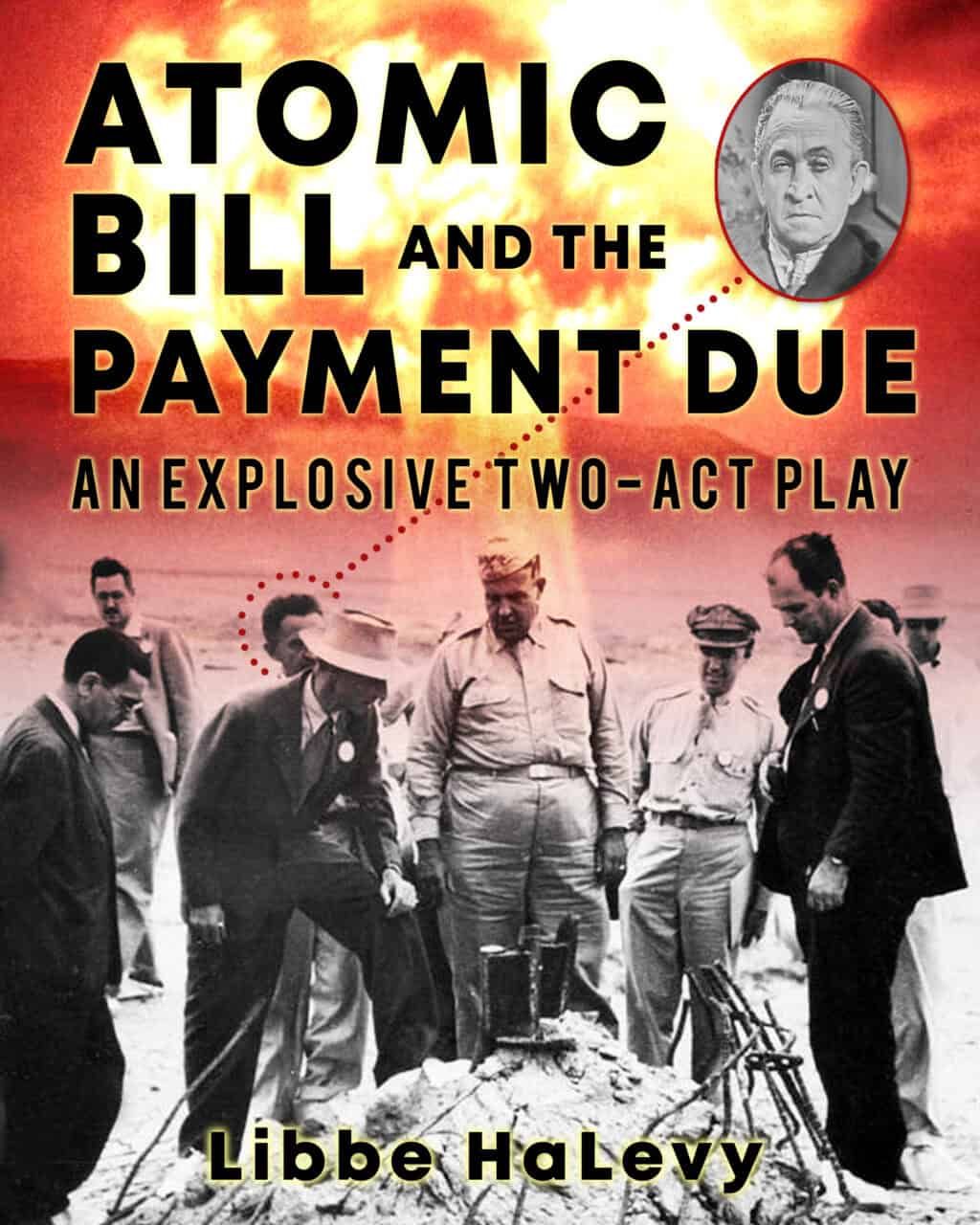
So I know what can happen when those nuclear so-called experts get it wrong. This week, a very special interview for me with director Ben Lederman and producer Gaia De Simoni, the forces behind the new documentary Bombshell An American Experience film premiering on PBS today, January 6th, 2026. Their work covers much of the same territory I address in my play atomic Bill, and the payment due with some significant differences.
00;03;44;02 - 00;04;24;08
Unknown
And we will have discussion about those differences between our approaches as well. Today is Tuesday, January 6th, 2026, and here is this week's special full length interview on the important new film bombshell. They created the bomb. Then they created its story. Truly nuclear news from a different perspective. Having spent more than 13 years researching and writing my play about William L Lawrence, the New York Times science reporter who is embedded in the Manhattan Project and who is a central source of disinformation about the bomb from its earliest days.
00;04;24;10 - 00;04;52;01
Unknown
I was astonished to meet two people as obsessed with this obscure journalist as I was. Together, they have made a documentary film that covers not just Lawrence, but the entire story of how the atomic, aka nuclear story has been manipulated from day one, and how what we accept as gospel about the bomb and its use in World War Two is a carefully constructed lie.
00;04;52;03 - 00;05;23;04
Unknown
Ben Lederman directed, and Gaia De Simoni produced bombshell, which carries the tagline they created the bomb, then created its story. It tells not just of Lawrence, but other journalists who work fed into or contradicted the government approved narrative. At the end of World War Two. It is an astonishing piece of filmmaking. Premiering tonight, January 6th, 2026, on PBS American Experience.
00;05;23;06 - 00;05;48;21
Unknown
I first met Ben in Gaia last September at the Westheimer Peace Symposium at Wilmington College in Ohio. That's where we shared a panel discussion and a lot of very energetic side conversation here. Here, I got to ask them all the questions I wanted to know about the film, its content, their process, and even how it relates to my play.
00;05;48;23 - 00;06;28;02
Unknown
We spoke on December 8th, 2025. Ben Lederman and Gaia De Simone. I'm so glad to have you here this week on Nuclear Hot Seat. Thank you. Thank you for having us. Let's start out with a little bit of background on the two of you. Ben, what is your background in history as a journalist and a filmmaker? My background in filmmaking started in current events, so I was working on films for frontline on PBS for its first 20 years and then made a transition to history, which is much more friendly to raising children.
00;06;28;04 - 00;06;57;05
Unknown
And so I have been working on films for American Experience and American Masters for many years. Gaia, what is your background and how did you and Ben start working together? My background is in journalism. I started working as a journalist when I was back in Italy, my home country, and then I moved to the United States in 2018 to study journalism.
00;06;57;07 - 00;07;30;22
Unknown
I started working here in a newsroom as a digital editor, but at the same time I was working with Ben on his previous film, Walter Winchell The Power of Gossip, which aired on American Masters. I was helping him mainly in archival research, and I really liked it, but I didn't get a sense of how and what happened. When you start working on a documentary, what's the process involved?
00;07;30;24 - 00;07;54;12
Unknown
So when the program aired, I asked, Ben, what are you doing now? What's your next project? He didn't really know at the time, but, what I knew was that I really wanted to work with him. And from the start till the end. Sense of how does it work to be in documentary and to produce a documentary from scratch.
00;07;54;15 - 00;08;29;00
Unknown
And I feel like I pretty much got a good sense of it right now. When did you first get the idea for this film, and how did you start working on it around 2021? Two things happened. I was just reading a new biography of someone who was my hero from the 10th grade, John Hersey, and I was in the middle of a new biography about Hersey, and I had finished with Guys Help, the film about Walter Winchell.
00;08;29;02 - 00;08;53;20
Unknown
So it was really somebody from the National Endowment that called me and suggested maybe I think about doing another journalism story. What am I focusing on now? And I said, well, nothing. I'm just reading a book about my childhood hero and talked a little bit about Hersey, and they said, that sounds interesting. Why don't you dig into that?
00;08;53;22 - 00;09;30;19
Unknown
So I did, and the story became bigger and bigger. And here we are. Did this start out as a project for the American Experience on PBS, or did that come later? That came later? Our grant came from the National Endowment for the Human Ities, and we worked for maybe two years and then realized that the documentary was going to go a couple different ways, depending on how much international focus we had in Japan, or whether the focus was going to be much more primarily American.
00;09;30;21 - 00;09;54;20
Unknown
And needing to sort that out. We spoke to American Experience and struck a deal for it to be part of the series. Greg Mitchell has been mentioned by himself, as well as others, repeatedly in connection with bombshell. He's well known to nuclear hot seat listeners as his last two nuclear themed films, Atomic Cover Up and The Atomic Bomb, and have both won awards at the International Uranium Film Festival.
00;09;54;20 - 00;10;28;29
Unknown
And we've interviewed him on Nuclear Hot Seat several times. What was his position on bombshell, and when and how did he become involved? I think Greg Mitchell position for the film was crucial. I consider his book The Age of Hiroshima with Jay Lifton as the Bible of this project, because that book covered not just John Hersey, but everything in the publicity machine that the government put in place before and when the bomb was dropped.
00;10;29;02 - 00;10;59;16
Unknown
So Greg Mitchell, I think, was one of the first people we approached when we were drafting the development application to the NIH. He was an advisor for the project, both in the development and the production grant. And then he was an interviewer, and he's one of the main interviewees we had. We interviewed him, along with other two experts, Michael Gordon and Alex Wildstein.
00;10;59;17 - 00;11;22;27
Unknown
They're both great and very knowledgeable about the topic, and we did these three interviews as the first interviews of the project, which Ben taught me. It's not normally what you do. Normally you do them as Lance because, you know, you can finesse and you can ask better questions or more specific questions based on what you don't already have.
00;11;23;02 - 00;11;48;16
Unknown
But we gamble. Then we went in and, you know, it turned out great. And I think those who will watch the film and they will understand the significance of weight that, Greg Mitchell brought to the project, along with all the other experts. We have different areas in the film that we touch. We can say that, you know, the main of course topic is journalism, but there are different areas.
00;11;48;16 - 00;12;16;23
Unknown
There is the black press, there is the Japanese American angle, there is the science angle, and of course the John Hersey angle. So every expertise that we had on the film brought a significant, I would say, contribution and knowledge to the project. I second that the issue of media surrounding the atomic bomb from the earliest days is complex and multi-layered.
00;12;17;01 - 00;12;43;21
Unknown
It truly was a war of truth versus propaganda. And the film does a brilliant job of leading us through the twists and turns to create a coherent picture of how the public was intentionally manipulated into atomic compliance. Let's start with looking at General Leslie Groves, who was the head of the Manhattan Project. When and how did he first impose the rule of secrecy?
00;12;43;24 - 00;13;26;10
Unknown
Leslie Groves was dying to get into this war. He was a quartermaster in the Army Corps of Engineers, and was looking both to step up to Lieutenant general and also to get himself closer to combat. So he was very disappointed when he got a call and first learned that his bosses had something else in mind for him. But once he realized, and once it was explained to him, that what he would be in charge of was a game changing part of the war, he got pretty excited, pretty fast.
00;13;26;12 - 00;13;50;17
Unknown
And how did he approach the need for secrecy? I think General Leslie Groves was picked because he was very good at his job in terms of compartmentalization. You know, we say in the film that everybody had their job. They were good at it. They were just doing that, and they didn't know what other people were doing in the project.
00;13;50;17 - 00;14;15;10
Unknown
So he was very good at handling secrecy. But I think he found himself in front of a problem the moment that the bomb would have been dropped. Like, how do you tell the American people that, you know, we have been working for years secretly on this project. We developed the bomb and then we drop it on Japan. How do you explain it?
00;14;15;12 - 00;14;51;16
Unknown
He understood that he had to control the narrative and the publicity of the bomb. General Groves had few people in mind to lead the publicity campaign, but they were not available, and someone then recommended him. William Leonard Lawrence, who was the New York Times science reporter, the first science journalist at the New York Times, and William Lawrence was dying for this job.
00;14;51;19 - 00;15;26;08
Unknown
He was an expert in everything nuclear. He had been writing about nuclear topics since 1938, if I'm not mistaken, and he actually was censored by the government because at some point he was publishing so many stories about atomic fission and how the Germans found there and discovered nuclear fission, that General Groves and his staff were concerned about all these news that were coming out.
00;15;26;10 - 00;15;54;02
Unknown
And so they sent out a memorandum to all news outlets that they could not mentioned in articles words like nuclear fission or atomic bomb or other wars related to this. And the New York Times complied with that. They stopped publishing news with certain words in it. And so I would say Lawrence was the right pick because he was expecting these calls from Groves.
00;15;54;04 - 00;16;24;06
Unknown
When Groves first learned of Lawrence. It was not out of admiration. Groves knew that Lawrence was writing about subjects that Groves did not want written about. William Lawrence was an interesting figure. He was very knowledgeable about science. He was one of the very first who, with a couple of other journalists, created this field of science journalism. It really hadn't existed before William Lawrence.
00;16;24;08 - 00;17;14;29
Unknown
So Groves reluctantly went to Lawrence and offered him what sounded like a pretty plum job, and that was to have exclusive access to get a story that no one else was going to get. And Lawrence was allowed to write anything he wanted about it, knowing that all of his work would be censored afterward. Once Lawrence began, it was like Lawrence was swallowed into the Manhattan Project for four months and in that time transformed from a respected science journalist into really an atomic hack, an atomic booster, and someone who actively lied on behalf of the government to put across their narrative as opposed to what was truly going on.
00;17;15;01 - 00;17;50;24
Unknown
What were Groves concerns about radiation and information about radiation, and how did that play out with Lawrence? Groves did not want to in any way raise the specter of the chemical germ, biological, any sort of scientific warfare. So he did not want the public, which had a really disdainful reaction to the chemical warfare that went on in World War One, to go anywhere near that.
00;17;50;24 - 00;18;18;14
Unknown
So he made sure and he made sure that Lawrence knew that his job was not to talk about that. And that was just fine with Lawrence. I think sometimes we forget that in the 1940s, journalists were also patriots, and everyone did feel like they were on the same team. And Lawrence was thrilled to be tapped to play a leading role on the team.
00;18;18;17 - 00;18;39;07
Unknown
And he knew there were rules, and he was just happy to go along with them, asking for a judgment on your part. Do you think at any point he had any conflicting feelings about the job he was doing and being asked to not report on radiation, even when it was known that that was a factor? It doesn't seem so.
00;18;39;09 - 00;19;21;08
Unknown
I mean, he was very happy. He ended up winning a Pulitzer Prize for his eyewitness account from a chase plane that went to Nagasaki when the second bomb was dropped, and William Lawrence just dined out on the story for years afterward. So years later, when you see him on television with Bob Hope, or when you see him doing radio pieces, he's very comfortable and doesn't seem conflicted in any way, nor did he write or admit or create any record at the time that he had any inner conflict about it.
00;19;21;11 - 00;19;47;02
Unknown
Of course, I have written an entire play about William Lawrence, which looks at the person and the possible conflicts he may have had. That's another story. But you identified a number of other reporters who figure in the film. Let's consider them what their work was and what happened to their work at the time. The first is Leslie Nakashima of the Associated Press, who was the first to report on Hiroshima.
00;19;47;05 - 00;20;16;12
Unknown
Leslie Nakashima was a very respected Japanese American reporter. He was well known in Hawaii and in the community in Oahu. He was born in a Y, but then moved back to Japan with his family in the 1930s. But then he moved back to Japan. He was in Japan when Pearl Harbor was bombed and he, you know, was out of a job.
00;20;16;14 - 00;20;43;09
Unknown
He was working at the time with United Press. He was in Japan and when the regime was bombed years later, his mother was living in Hiroshima. He found himself to book the first train ticket that he could find. He went to Hiroshima to check on his mother. That was his first intention. But then when he arrived there, he couldn't, you know, help himself.
00;20;43;09 - 00;21;17;22
Unknown
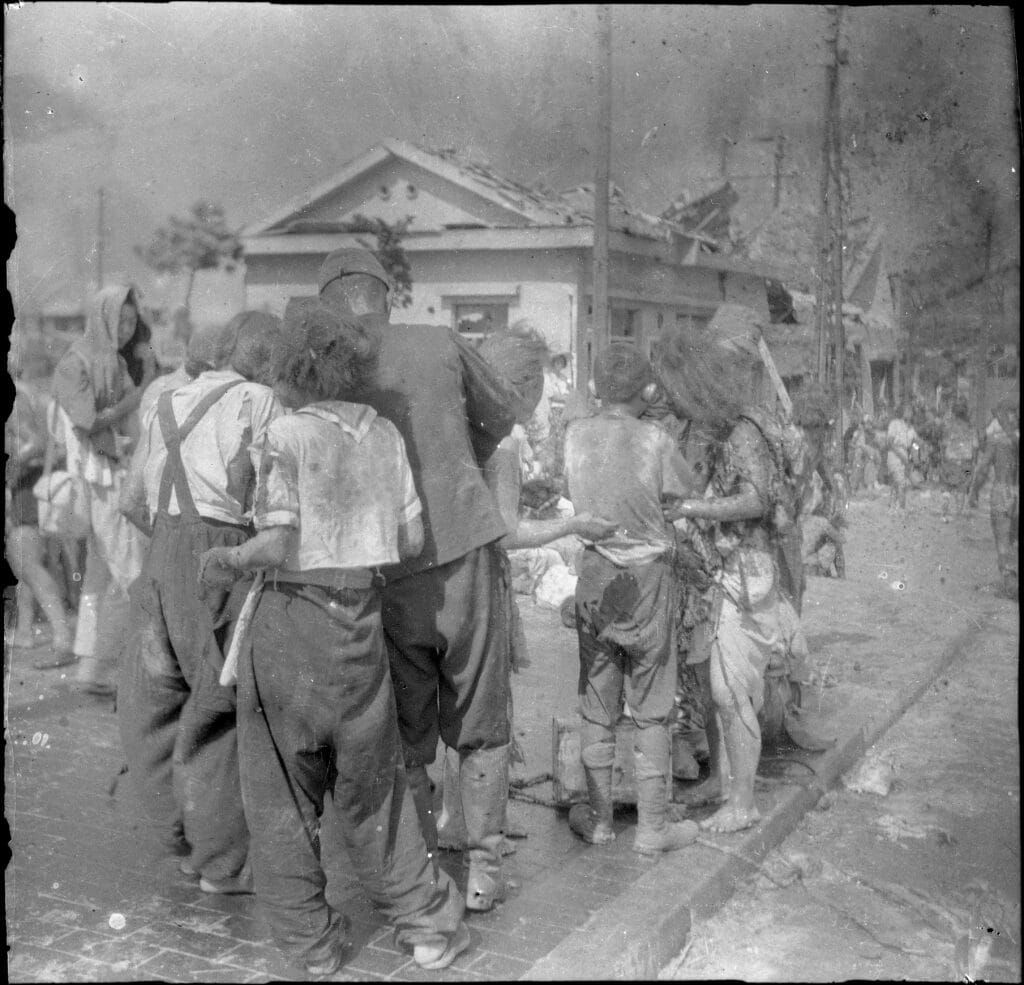
But reporting on what he was seeing, which was, as we say in the film, a sea of destruction. He reported about the victims in Iro Shima, who were also his acquaintance from a while. He interviewed a lot of people he knew from his childhood and his life in Hawaii. He reported about these sickness that they were developing, and he went back to Tokyo before the surrender ceremonies in September.
00;21;17;25 - 00;21;58;00
Unknown
And he handed the dispatch to one of the United Press reporters there. So that it could be published in the US. But what happened was that it was published, but most other news outlets censored or left out the witnesses interviewed by Nakashima and the radiation effects. Also, the New York Times republished the story. But again, the radiation effects and the testimonies from the people who were interviewed were left out not completely, but mostly.
00;21;58;02 - 00;22;29;27
Unknown
And when The New York Times published the story, they also below the Nakashima story, they decided to publish a story by Leslie Groves, who explained that all the dispatches, all the I'm paraphrasing, I'm not quoting him, but all the stories coming out from Japan were considered Japanese propaganda, in his words. So Leslie Nakajima story was completely, I would say, forgotten.
00;22;29;29 - 00;23;09;10
Unknown
He is the first Western reporter. He was Japanese American to report from Hiroshima, but most of the time recognition is given to Wilfred Bouchot, and his story was buried in American newspapers and never came out. I would say, and he was the first one. Leslie Nakashima, his parents were part of the first wave of Japanese immigrants to come from Japan to gain a foothold in America, in Hawaii, and they worked in the sugar canes of Hawaii.
00;23;09;12 - 00;23;40;14
Unknown
And this is in the 1890s or so. And over the decades, as there became more tension between America and Japan, Nakashima, his parents, became one of the first to move back to Japan. Nakashima followed with his family a few years later and went to Tokyo. He considered himself completely American. His first name was Leslie, and he worked for the United Press.
00;23;40;17 - 00;24;14;01
Unknown
When he went back to Japan, he was working for the United Press Bureau in Tokyo until the bombing of Pearl Harbor, when UPS Bureau was summarily closed by the Japanese. Nakashima didn't know what to do. And he had parents nearby in Hiroshima, and so he found work in the Japanese press. So he was on the ground when the bomb was dropped.
00;24;14;03 - 00;24;43;24
Unknown
And it made it possible for him to be the first person there and to really be the first American there. But his story was ready. He checked on his mom. He then looked around and said, oh my God, and looked at the vast devastation of Hiroshima. And out of reporters instinct started writing it up. He wrote a fabulous account.
00;24;43;27 - 00;25;19;23
Unknown
And by that time he also was interviewing some people, some of which he knew from his parents generation in Hawaii, who had also moved back. So he had this fabulous story. And when the arriving troops with MacArthur came and the press came with them, he quietly secrets his story into the hands of a couple of yuppie reporters who were coming over and said, get this back to Hawaii fast.
00;25;19;26 - 00;25;55;25
Unknown
They did not. Kashima story was printed almost in its entirety in Hawaii and was well believed. But then something funny happened. It seemed like, on its way east to the mainland of the United States, more and more of Nakashima was. Details were cut out of the story, and it became more and more censored so that finally, by the time it got to the times and they published a rather sanitized and shortened version of Nakashima story on page four.
00;25;55;27 - 00;26;24;14
Unknown
Okay, this is not front page news anymore. It came with, as I said, it came with a proviso. It came with a cautionary from General Groves saying, by the way, readers, anything coming out of Japan is not to be believed. It's all Japanese propaganda. And he made no distinctions between someone like Nakashima as reporting and something coming from the Japanese government itself.
00;26;24;16 - 00;27;02;02
Unknown
And after that first story, there were no follow up stories from him now, because once MacArthur landed, censorship was imposed. So there were no more stories. That was when William Lawrence's months long reporting of The Secret Cities, where the fuel was made for the bombs, and from Los Alamos, where the bombs were assembled. That's when all of that very detailed, long, interesting, engrossing backgrounder came into play for at least a couple of weeks.
00;27;02;05 - 00;27;44;00
Unknown
And there wasn't really no firsthand reporting in the first two weeks from Hiroshima. There was one firsthand report from Hiroshima that happened by stealth and very cagey planning by an Australian journalist named Wilfred Burchett. He managed to get in by avoiding the surrender ceremony on the USS Missouri and got to Hiroshima, went to a hospital, saw what was there, wrote his article up and managed to get it to the London Daily Express, which published it under the headline Atomic Plague.
00;27;44;03 - 00;28;36;08
Unknown
I write this as a warning to the world. He didn't understand about radiation what it was. He didn't have that word, so he called it a plague as he had watched the people die there. What part does his on the ground first person reporting play in this follow up of repression of information by Groves and the government? Wilfred Burchard, I think, plays an important role in scaring the government in making the government realizing that they had to control also the narrative that was coming out of Japan, not just what was happening in the United States, but also how reporters would or better say, would not get access to information in Japan.
00;28;36;10 - 00;29;08;26
Unknown
He was able, as you correctly said, to sneak into Hiroshima. He was brought to hospitals. He saw the victims. And at the same time, when he was in Hiroshima, there was a group of American reporters who were there with the military to go over the ruins, report what they were seeing, but just the devastation, the building devastation they were not brought to the hospitals were shattered.
00;29;08;27 - 00;29;48;05
Unknown
Went on his own and he reported what was happening. He collected all the information. He filed the dispatch to the London Daily Express. And I remember during my kind of research, I read part of his books and testimony, and he was in Hiroshima when I believe it was. General Farrand was hosting a press conference on the UN. What the scientists and the military discovered, saying that there was no radiation, that it was safe for the military to come in.
00;29;48;11 - 00;30;16;10
Unknown
And Bouchard was there, and he contested far, but then he fell sick. We don't know if it was because of radiation. We don't know anything about it. But what he reported was that he was carrying with himself a camera. He had taken photos of what he saw, and when he woke up at the hospital, everything was gone. His camera was gone.
00;30;16;10 - 00;30;44;03
Unknown
There were no photos of what he collected. And I think this is of course, we I don't have a personal record of. I only read what he said, so I didn't fact check the information personally. But if you think about it, he was seen as a threat. But and his story didn't come out in the United States, he story only made it to London, Europe and Australia.
00;30;44;03 - 00;31;15;04
Unknown
When we were doing the research, we wanted to show the newspapers where his story was published. And there is this fantastic tool which is called Newspapers.com that collects all the newspapers, I would say from the 1900 until now, and that we couldn't find his story published in American newspapers. We only found it in Australian newspapers. And of course, Newspapers.com is an American database.
00;31;15;04 - 00;31;41;12
Unknown
So we didn't have access to more European newspapers. But this gives you a sense of what happened to his dispatch and how. And Fred Bouchard was, because he went to places like, I believe it's Greg Mitchell who was say that in the film where he was not supposed to go, and that made him a problem for the government, for the American government, I would say.
00;31;41;14 - 00;32;11;01
Unknown
Right. And then they kicked him out of Japan. They did. The parallel to Burchett is George Weller of the Chicago Daily News, who immediately after the surrender ceremony on the USS Missouri, snuck out to Nagasaki and wrote a story about what he was seeing there. But he seemed to have played more by the rules in giving his story to official sources, trusting that it would be passed on.
00;32;11;05 - 00;32;37;25
Unknown
What happened to his story, and have we ever been able to see it? Well, it played by different rules than Chet because he was different than Chet. George Weller was an American who was working for a Chicago paper, and so he knew that he was bound by the government rule. The shot was so cagey about evading so he went to Nagasaki.
00;32;37;27 - 00;33;16;19
Unknown
And Weller's reporting very much reflected what Burchett was writing about in Hiroshima. Their reporting is actually very similar, but Weller felt that he was able to show his pieces to general MacArthur and submit them, and that after vetting, they would be published. Weller was very confident about that, and he made a carbon that he kept to himself and then submitted his pieces, which were never published.
00;33;16;22 - 00;33;53;28
Unknown
And decades decades later, Weller's son Anthony was looking in his home in Weller's home in Italy and found in the attic boxes with his original carbines. So the son was able to print a book with the father's articles, maybe six decades later. We'll return to this week's interview with director Ben Motorman and producer Gaia Simeon of the New American Experience documentary bombshell in just a moment.
00;33;53;28 - 00;34;20;12
Unknown
But first, the nuclear story told to the public has been manipulated since the very first days of the atomic era. And it's hard getting the truth out when it's been buried in propaganda or erased into silence. This week's feature on bombshell parallels the subject matter of my play, atomic Bill and the payment do media manipulation that hid and continues to hide the truth about the danger of nuclear weapons.
00;34;20;12 - 00;34;59;20
Unknown
And by extension, nuclear power. Both works put the spotlight on the crucial importance of journalists not only telling the story, but getting it right, freeing it from government propaganda and industry promoted talking points. The difference between the two projects documentaries must stick with absolute fidelity to source material as it exists. While theater is free to explore the emotions, morality, drama and spirit of those involved, breaking the bounds of time, distance and even life itself as it comes to a more humane and humane perspective.
00;34;59;26 - 00;35;34;23
Unknown
And how this happened and what we might do about it. What it boils down to is that journalists are essential in uncovering the difficult facts and making them available to the public. These days, most do not have the time, background, or backing from their media organizations to do the necessary work. And that's why you need nuclear hotseat. We always look for the deepest cut on Nuclear Madness, exposing the establishment's manipulations while informing you about what activists around the world are doing to fight back.
00;35;34;25 - 00;35;56;21
Unknown
But in order to keep doing this work, we need your help. That's why the time would be right now to support us with a donation. We make it easy. Go to nuclear hotseat.com. There's a red donate button. Click on it and follow the prompts. Or if you have Zelle, you can send money directly and without fees to info at Nuclear Hot Sitcom.
00;35;56;23 - 00;36;28;07
Unknown
Nuclear hotseat is a 501 C3 nonprofit organization, which means that anything you donate is tax deductible. Whatever you can do helps. So don't wait. Go right now to Nuclear Hot Sitcom to support our work, so we can continue to provide you with the nuclear truths that the industry would rather you not know. Now, back to the conclusion of this week's featured interview with director Ben Lederman and producer Gaia De Simone of the New American Experience documentary bombshell.
00;36;28;10 - 00;36;55;11
Unknown
Another reporter who, quite frankly, I had never encountered in any of my research on William Lawrence or the atomic bill or this era is Charles Loeb of the Cleveland Call and Post, who was a black reporter, and he wrote from that perspective, understanding that the Japanese were also people of color. He reported on Hiroshima and is credited by some with breaking the story of the radiation that was happening there.
00;36;55;17 - 00;37;32;11
Unknown
Talk to us about Charles Loeb and his place in all of this. Charles Love was a not freak, an American reporter. He became later managing editor of the Cleveland Column Post. He was a black were correspondent for the NCPa, which at the time was the Negro Newspaper Publisher Association. He went all over the place in the Pacific because the black press had different seven worker respondents who were covering different areas of World War two.
00;37;32;12 - 00;38;00;11
Unknown
There were some who were deployed in Europe, others were in the Pacific, in Japan, others were in Australia. So Charles Loeb was assigned to the Pacific. He went to Guam. He went everywhere with black troops, and at some point he followed the black troops to Japan for the surrender on the USS Missouri on September 2nd. So he was there.
00;38;00;11 - 00;38;29;09
Unknown
He was one, I think, of the two black reporters on the USS Missouri to witness Japan's surrender from Tokyo. He didn't go to Hiroshima himself, but, he reports these journalists who went to Hiroshima and came back to Tokyo completely flabbergasted from what they saw. And he reports about it. I think he was very smart in reporting about it.
00;38;29;11 - 00;39;03;01
Unknown
He was more because he did just the reporter job. He reported the facts. He reported what specifically a scientist in general was saying, which was General Stafford Warren, who was in charge of the medical investigation in Hiroshima and Nagasaki at the time. So he reported it word by word. What staffer Warren was saying about radiation disease and about what was happening to the Japanese victims.
00;39;03;03 - 00;39;36;19
Unknown
His report was published way later than Wilfred Bouchard and George Weller, only because African American newspaper at the time were publishing a news weekly instead of daily. There was the Atlanta Daily Word that was publishing a news daily about Charles Loeb. Report was published in October 1945, but he's reporting went under the radar because the black press wasn't trusted by the white audience, by the white media.
00;39;36;21 - 00;40;07;11
Unknown
No one republish it in the wide media Charles Loeb story. It was syndicated by the Other Black Papers, by the Cleveland Column post, of course, by the Journal and Guide. But it went under the radar, I would say. And it wasn't until probably 2022 when The New York Times, William Broad, published an article about Charles Loeb that, you know, no one knew about his story and what he did.
00;40;07;13 - 00;40;34;23
Unknown
So there is a definite reason why I hadn't heard about Charles Loeb, despite my research. There is a reason why you didn't find them in your research also, because unfortunately, which is I think, a huge loss for anyone who wants to study and explore the archives. There is not a consistent archive of black newspapers. The Cleveland column past doesn't have an archive.
00;40;34;27 - 00;41;05;04
Unknown
I believe most of the papers were destroyed and there is a small database which is called ProQuest, where you can find a lot, but not everything that is out there in terms of black press. And there is not even a lot of photos. We were so struggling. We have all these beautiful photos in newspaper of black military in action and also black were correspondents themselves.
00;41;05;04 - 00;41;28;01
Unknown
Their profile picture like with, you know, the caption saying, This is Charles Loeb, he's going out on the Pacific, you know, to report for the Atlanta Daily World. But we couldn't find the original copy. We had to work with what the newspaper had because there there is no way to access the archive and find your region on copies of those photos.
00;41;28;03 - 00;41;54;11
Unknown
Unless, of course, the family has. It's a it's a struggle. And it's it's a pity, I would say, because there is a huge story in the that could be done in documentaries, could be done about the black press and the black worker respondents. I think it's worth reiterating a couple of things. The guy mentioned during the war, the black press played by different rules than the white press or the mainstream press.
00;41;54;13 - 00;42;21;21
Unknown
They were publishing weekly or longer. They were not publishing daily. So the way they wrote their stories had to be a bit more reflective, a bit more of the kind of stories the decades later you and I would look to see in time magazine or Newsweek magazine, and not a daily newspaper. Loeb was reflective. In fact, he titled his piece Loeb Reflects on.
00;42;21;24 - 00;42;51;16
Unknown
And then it would go on and guys write the black press went where the black soldiers went. So they had a a narrower view, a different view, and in a way, a slightly more thoughtful view of what was going on. So it is sad that because they reported weekly and didn't have the resources when they were reporting, they had to divide and conquer.
00;42;51;18 - 00;43;23;03
Unknown
There was simply not enough money to go around to have a bunch of correspondents in the same place. So the black press would do much more poor reporting. One from one paper would go here, one from another paper would go there. They were divided up and Loeb just happened to be that guy in that place. He wrote wonderful stuff, and he realized that his own reflections were not going to be trusted necessarily.
00;43;23;05 - 00;43;53;14
Unknown
So he made a point to interview Army doctors who had real knowledge of what was going on with radiation. And so he would interview Stafford Warren and the Stafford Warren downplayed the role of radiation. The fact that he mentioned it, the fact that Loeb was able to engage him about it, gave Loeb a real credibility. Suddenly to what he was saying.
00;43;53;16 - 00;44;20;00
Unknown
Well, there's clearly room for some major proposal to be given to come up with an archive of the information from the black press, especially during this period of time. What I'd like to do now is move on to your hero, then, John Hersey. He wrote his landmark 30,000 word story on Hiroshima in 1946 for The New Yorker, and it did become the entire issue of the magazine.
00;44;20;03 - 00;44;51;06
Unknown
How did this come about, and what made the work that he did? And this is in 1946 now. So it's a year after the bomb was dropped. What made his work so much different from what had come before? Hersey was not part of the reporting team that went quickly to Japan and Hiroshima and Nagasaki. During that time, John Hersey was actually writing a freelance piece about the part of China he came from as a small boy.
00;44;51;09 - 00;45;29;07
Unknown
He was the son of missionary parents. And later on, he reflected, that gave him a certain view of Asian people, namely, that Asian people were people, not that they were Asian, not that they were foreign, not that they were the other. So he had a kind of sensitivity to people and a willingness to individualize their stories and treat them as people who had gone through a horrible event, rather than classing them as a large group as most of the other press was doing.
00;45;29;09 - 00;45;51;25
Unknown
So his problem was deciding whether he would do it at all or not. He had been reporting in China, and he decided to, catch a ride with the Navy boat going over to Japan. And along the way, he realized, you know, they're going to be doing more testing. They're going to be testing new bombs in the Bikini Atoll.
00;45;51;28 - 00;46;14;13
Unknown
And maybe by the time they did, nobody in America would care anymore about Hiroshima. They might have had enough. And he had real doubts about it, which he shared with his editor. And his editor said, don't be silly. This is going to be great. Just do your thing and we'll do it for the anniversary in 46, one year later.
00;46;14;15 - 00;46;42;22
Unknown
So Hersey did his reporting and then quickly came back to New York to write it up, and only then realized that he wasn't writing a 7500 word piece, which is about standard, a New Yorker article. His piece was topping out at close to 30,000 words. And at first, the New Yorker thought they would publish it in four parts, that it would be a continuing piece.
00;46;42;25 - 00;47;06;28
Unknown
The more the editors read it, the more they realized that would Hersey was doing was he was employing novelistic techniques to weave his characters. And there was no way that by the time somebody got to part two or part three and they did the recap at the top of the piece, like we sometimes see on TV now. Previously on.
00;47;07;00 - 00;47;37;09
Unknown
They realized it wasn't going to work. And that in a way forced the hand of the editors of The New Yorker. And they finally decided, well, let's bite the bullet and make one whole magazine this one story. What was the impact, first of all, of the massive and unprecedented size of this article and also the fact that he did take such a human and humane look at the people of Japan who went through the atomic bombing.
00;47;37;11 - 00;48;12;02
Unknown
I think it was unprecedented. It was not even the editor of The New Yorker expected such a success. The issue sold out the day it hit the stone. It was turned into a for fortnight episode on ABC radio. It was turned into a book. There are tons of letters from newspapers abroad in Europe also asking the New Yorker to republish this story.
00;48;12;04 - 00;48;45;06
Unknown
And I think Americans reckon with what happened because Hersey was telling the story of these Sikh survivors who had in common to be, you know, at the same time experiencing these terrible events. And you shared their stories, which interweaves with each other from their perspective, from what happened to them. And so Americans found themselves. What if this happens to me?
00;48;45;08 - 00;49;10;12
Unknown
It could actually happen to them. And Hersey made them realize that he personalize the story through the eyes of these six Japanese survivors. There's one more story that we need to take a look at that is featured in the film, and that is that. In 1947, a story was released under the byline of Secretary of War Henry L Stimson.
00;49;10;14 - 00;49;38;22
Unknown
It provided what became the official explanation of why we dropped the atomic bombs. How did this come about? What did it say? Who actually wrote it, and what was the impact? Soon after John Percy's piece came out in August 31st, 1946, Leslie Groves, but especially the Truman administration, realized they had a problem in their hands. They had to handle the American public.
00;49;38;24 - 00;50;13;16
Unknown
So they started a new counter-narrative to John Hersey, the Truman administration. I believe that Conant, who was Harvard president and he was on the Manhattan Project as well. He was concerned about how Percy's piece could damage the narrative that the government put out. So they started this counter narrative machine. They fought. Then Henry Stimson, who was former Secretary of War, was the right person to write an article about why we dropped the atomic bomb.
00;50;13;19 - 00;50;54;02
Unknown
Yes, it was written by Stimson, but not just him. It was written by Leslie Groves Conant. But this article, of course, came out with Henry Stimson byline, and it was published in January 1947, in Harper's Magazine. And the administration justify why the bombs were used. They had these bombs. They were built to be dropped on Germany. And then when Germany, to render, they turned their attention to Japan, and it would have been a better way to end the war, because it would have saved thousands of American lives using the bomb.
00;50;54;04 - 00;51;22;01
Unknown
They rolled back and they go back, justifying the use of the bombs. This is the article that came out in 1947. That 1947 Stimson article really put the nail in the coffin of a more accurate and nuanced understanding of the bomb, what it did, why it was used, and why it should never be used again. And this is what has become imbued in the American public as the official history of the atomic bomb.
00;51;22;03 - 00;51;51;17
Unknown
The film clearly lays out how that happened as an ongoing betrayal of truth. So what impact in terms of countering that narrative do you hope the film will have? I think we hope that by exploring it in detail about how the narrative was crafted, that simply by understanding that are audiences today, will bring a certain skepticism to what they hear about today's news.
00;51;51;19 - 00;52;31;00
Unknown
I mean, it's the same reflection that happened then that could happen now, whether it's about the bombing of Iranian military sites or the rebuilding of the US nuclear arsenal, or the way the press covers the Pentagon. There are issues from that time that we think resonate loudly now, and that's what we hope people take away from it. The most staggering thing of what happened at that time was that one man was able to take the atomic bombing and narrow it down to a bedtime story for America.
00;52;31;02 - 00;53;07;10
Unknown
That bedtime story was repeated and repeated and repeated. And the more you hear a bedtime story, the more you're likely to believe it. So that by the time in 2023, I looked at the film called Oppenheimer, it was dramatically done. It had tremendous production value, and it was very impactful. But when you strip it down, it is basically a retelling of that bedtime story, which is very comforting to Americans.
00;53;07;18 - 00;53;35;13
Unknown
You did not see Americans streaming out of theaters in 2023 from Oppenheimer with angst about the bomb. Okay, there was a lot of self-satisfaction that we had done the right thing, which was the whole point of Simpson writing his article for Harper's was to just give Americans the confidence, the comfort, the reassurance that we were on the side of the right.
00;53;35;16 - 00;54;03;19
Unknown
We were doing the right thing, and we were saving thousands or hundreds of thousands of American boys lives and perhaps many 100,000 or more of Japanese. There was not a lot of sophistication into looking at the geopolitical picture. You know, when you tell a bedtime story, things get wheedled out. And things did in this case, and that's shocking for this film in particular.
00;54;03;19 - 00;54;36;10
Unknown
We had a certain responsibility that we took very seriously. I've done a lot of historical documentaries and documentaries where we used various feature techniques, we use recreations, we used animation, we used very creative techniques. We did not do that at all in this film. This film was about telling the story and doing it in a trustworthy way. So it is perhaps the most conventional film I've made in years and years in years.
00;54;36;13 - 00;54;58;29
Unknown
But that was on purpose. And we know it's not going to be a festival winner at many film festivals around the country. It's not that kind of film, but to the people it hits, we hope it lands and we hope it will have a serious message. The people take away from it and if we can do that, we're a success.
00;54;59;02 - 00;55;30;06
Unknown
I think your success already, just by virtue of the fact of having created this landmark film. We were together at the Westheimer Peace Symposium at Wilmington College back in September, and we were on a panel together where we were asked to reflect upon each other's work. I was, of course, very complimentary to bombshell, and rightly so, as I consider it a cornerstone work in our understanding of how we came to what we currently think about the atomic and nuclear weapons.
00;55;30;09 - 00;55;51;17
Unknown
When you commented on my play atomic Bill and the Payment do about Lawrence, which you had read but not seen the stage reading them, and I'm paraphrasing slightly here, but not at the end. You said that what hit you more than anything else about my play was my audacity in writing it, and you even turned towards me to land that word audacity.
00;55;51;20 - 00;56;26;00
Unknown
What did you mean by that? What I mean is, in the work that I do is documentary filmmakers, is we feel we're working with handcuffs. We can only use a picture we find, and we can only use it if we find it. We can only use the written words. We find we don't have the creative license. We don't have the creative spirit to think about what could have been or how to break this down more psychologically.
00;56;26;02 - 00;56;45;16
Unknown
And that is astounding to me. And it's astounding to me that you did it. So I would say the same word audacity today. It was really terrific. Thank you. I was afraid it had a negative connotation and it has puzzled me ever since. And I was kicking myself that I didn't do the follow up question in the moment.
00;56;45;18 - 00;57;27;20
Unknown
I got on up. And we want to know when can we look forward to learning more, seeing or experiencing more the production of your work? I am open to theaters, directors, actors. There's some plum roles in this thing who would be interested in helping usher this towards a full production at Wilmington College for the Peace Resource Center. I got a chance to see what this play could be, just based on a staged reading with a few projections behind, and it blew the audience away to the point where three weeks later, at our shared symposium, I had kids who were involved in the production running up to me from across the campus when they saw me
00;57;27;20 - 00;57;52;17
Unknown
saying, oh my God, your play has stayed with me. We've got to get this into young people's minds and hearts. We've got to change this narrative. So I know the play works. And from your mouth to somebody's ears, if you know anybody, please let me know, because I haven't been with American Experience. I'm a little podcaster, playwright, sitting in my living room talking to myself on the microphone, and my dog looks at me and goes, why are you talking to yourself again?
00;57;52;19 - 00;58;16;14
Unknown
But any help that you have to give, I would appreciate it. We'll work together. We will both help get this narrative out to the world and hopefully change minds and hearts and beliefs, and people will find out exactly how they have been hoodwinked about nuclear and what they can do to turn it around. Terrific. Well, we look forward to bumping into you in the neighborhood, either on Broadway or at the Hollywood Walk of Fame.
00;58;16;17 - 00;58;45;23
Unknown
For now, I want to thank you. Then Lederman and Gallo, De Simone, not only for your work, but having been so generous with your time and speaking with us here today on Nuclear Hot Seat. Thank you for having us. Thanks so much. We will have a link up on our website. Nuclear hot sitcom under this episode number 758, where you can access bombshell in its entirety, and I encourage you to do so.
00;58;45;25 - 00;59;15;04
Unknown
Meanwhile, if you're interested in learning more about atomic Bill and the payment, do the Athena Project Theater Company is including it in there. Read and rant online program. This provides an opportunity for you to read a PDF of the script and then participate in an online feedback session. It will take place on Monday, January 19th at 8:30 p.m. eastern, 5:30 p.m. Pacific Time to sign up and gain access.
00;59;15;05 - 00;59;42;16
Unknown
There will be a link up on our website. Nuclear hot sitcom under this episode number 758. This has been nuclear hotseat for Tuesday, January 6th, 2026. Sign up to get Nuclear Hotseat delivered via email every week. Go to Nuclear Hot Sitcom. There's a yellow opt in box. Put in your first name and an email address, and as soon as each week's show posts, you will get the link to that information.
00;59;42;18 - 01;00;00;19
Unknown
And there you have it, your weekly nuclear Wake-Up call. So whatever you do, do not go back to sleep because we are all in the nuclear hotseat.