Episode transcript
Nuclear Hotseat #796 - Sept. 22, 2026
Atoms & Eve – New Program on Radiation Impacts on Women, Children & Pregnancy – Mary Olson, Cindy Folkers
Libbe HaLevy: [00:00:00] Nuclear radiation education. It is tough getting across the points we wanna make about the ongoing dangers of nuclear because so few people understand about radiation, what it is, what it does, why it's dangerous, and what we can do about it. The nuclear industry keeps us drowning in jargon and technical terms to make us feel incompetent or stupid, and they make no effort to make their talking points easier to understand.
So when two veteran experts on radiation put together a new program to make radiation pollution dangers easy to understand, and why it's important that we understand, and one of them tells us-
Cindy Folkers: So even if we never released another atom of radioactivity or another radionuclide into the environment, we would have to deal with the [00:01:00] exposures and the health fallout from the pollution that we've already released, the radioactive pollution, and not just from bombs, but from the catastrophic releases from civilian reactors and civilian uranium mines, et cetera.
Libbe HaLevy: And there's quite a lot of et cetera. Well, when Cindy Folkers of Beyond Nuclear and Mary Olson of Generational Radiation Impact Project team up to create a new program tailored for social media distribution to get the word out about radiation pollution, you know that a lot more people will now have the chance to move away from that awful, deadly, dangerous seat that we all share.
Nuclear Hotseat Theme: Nuclear Hotseat. What are those people thinking? Nuclear Hotseat. What have those boys been drinking? Nuclear Hotseat. The corium is sinking. Our time to [00:02:00] act is shrinking, but our activists are linking.
Nuclear Hotseat. It's da bomb
Libbe HaLevy: Welcome to Nuclear Hotseat, the weekly international news magazine keeping you up to date on all things nuclear from a different perspective. We're a show for people who know nothing about nuclear who want to know something, and people who know something about nuclear who would like to know just a little bit more.
My name is Libbe HaLevy. I'm the producer and host, as well as a survivor of the nuclear accident at Three Mile Island from just one mile away, so I know what can happen when those nuclear so-called experts get it wrong. This week, we look at a new online program on radiation dangers called Atoms and Eve.
It was [00:03:00] put together by two veteran researchers and activists, Mary Olson, who is an evolutionary biologist, founder and CEO of Generational Radiation Impact Project, and Cindy Folkers, radiation and health hazard specialist for Beyond Nuclear Together, they have more than fifty years of experience in the field, and they distill it into a website and educational program that is easy to understand in tiny pieces, and it explains the essence of why we need to stop building new reactors and weapons, move towards shutting down current nuclear facilities, and figure out what the heck we're going to do about the mess of radioactive materials, highly radioactive materials, that we have already created.
We will also have nuclear news from around the world, numbnuts of the week for outstanding nuclear boneheadedness, [00:04:00] and lots more verifiable nuclear information, all of it coming up in just a few moments. Today is Tuesday, September twenty-second, twenty twenty-six, and here is this week's nuclear news from a different perspective.
Starting out here in the US in Michigan, where in breaking news, a refueling snafu has been revealed at the Palisades atomic reactor that risks worker and public safety, where it has taken owner-operator Holtec almost three weeks to admit to the problem. On September twenty-first, Holtec issued a press release which admitted that they had bungled loading a thousand-pound, highly radioactive, irradiated nuclear fuel assembly into the atomic reactor core.
This is the latest in a long list of safety significant mistakes made by Holtec in trying to bring this [00:05:00] zombie reactor, which had been shut down, back to life. During fuel loading activities, one fuel assembly, these assemblies contain highly radioactive nuclear fuel. During the loading, one fuel assembly tilted from its upright position after it had been placed, and the fuel handling machine grapple had been disengaged.
Their press release further seems to contradict itself, first saying that plant personnel responded promptly in accordance with established procedures, and the US Nuclear Regulatory Commission, the NRC, was notified. But in the very next sentence, it says, plant personnel evaluated the incident and determined that it did not trigger the safety reporting requirements under NRC regulations.
So did it or didn't it? Meanwhile, fuel loading remains paused. Holtec's press release admission came after a September 21st article by Cody Combs in The National, entitled Incident [00:06:00] at Palisades Nuclear Reactor Under Review by Regulator, Fuel Loading Paused at Decommissioned Plant in Michigan That May Be Reopened.
In response to this revelation, longtime nuclear energy critic Edwin Lyman, a physicist and the director of nuclear power safety with the Union of Concerned Scientists, wrote, "An eagle-eyed observer brought to my attention a post on Reddit alleging that Holtec dropped a partially burned nuclear fuel assembly during its fueling of the Palisades reactor in Michigan more than two weeks ago, yet nothing but silence from either the company or NRC."
Kevin Kamps, executive director of Don't Waste Michigan in Kalamazoo, Michigan, only 35 miles downwind of Palisades, wrote, "It seems that both Holtec and NRC attempted to cover up this embarrassing and critical safety-related incident, but Dr. Lyman's social media post and The National's coverage forced [00:07:00] Holtec's hand into hastily issuing a press release attempting to downplay the incident after the news article's publication."
And Arne Gundersen, a nuclear engineer with 55 years of relevant experience, said, "It is yet another rookie snafu by Holtec. They have had four years to practice and yet could not get this simple maneuver right. Running a nuclear plant is 1,000 times harder than putting the fuel in correctly. How can they be trusted to run a car when they can't even put gas in the tank?"
Don't Waste Michigan and Michigan Safe Energy Future are now pursuing federal court appeals in both the Sixth District US Court of Appeals in Cincinnati and the US Court of Appeals for the District of Columbia Circuit in Washington in opposition to the Palisades restart. For now, Holtec has paused all actions regarding refueling and restart.
We're going to [00:08:00] link to the full news release that was put out by Don't Waste Michigan because there are not only many more details on this, but there are some of the comments that have been posted about it, and they range from outraged to hilarious. And speaking of the NRC and nuclear reactor regulations, here's this week's.
Numnutz of the Week Theme: Nuclear Hotseat. Nuclear Hotseat. Nuclear Hotseat. Numnutz of the Week!
Libbe HaLevy: I don't know what they've been putting into the Kool-Aid that the folks over at the Nuclear Regulatory Commission have been drinking, but man, they are really off on a rip and a tear. Not only have they been ripping and tearing at safety standards at nuclear reactors, now they have proposed a new rule called Regulatory Enhancements for Reactor Licensing, Decommissioning, and Operational Oversight.
The proposal would touch upon requirements across reactor [00:09:00] licensing, construction, operation, and decommissioning. While they're trying to fob this off with the, "There, there, Missy, don't worry your pretty little head about it," claiming that these changes are technical and incremental, they include eliminating expiration dates for future standard design approvals, providing what they call additional flexibility in environmental reviews for early site permits.
Additional flexibility? You mean they get to weasel out of even more safety requirements? Updating operator licensing requirements. Does that mean making them more stringent or less stringent? I know which way I'm betting. And eliminating or modifying a number of reporting and administrative requirements.
So hey, they can get away with whatever they're getting away with. The NRC claims this is only to simplify licensing and compliance processes for reactor applicants and licensees. In other words, [00:10:00] letting them get away with slow-motion murder? Setting us up for future catastrophic events? Who knows? But the good news according to the NRC is that they estimate that the proposed changes would result in approximately 305 million to 398 million US dollars in net averted industry costs over 30 years As I've said often on this show, the two things you never want to hear in connection with nuclear reactors is cheaper and faster.
And my take on this is that they are kowtowing to the nuclear industry while putting people and the environment at risk. And that's why, once again, Nuclear Regulatory Commission and your new proposed rule changes, you are this week's.
Numnutz of the Week Theme: Nuclear Hotseat. Numnutz of the Week!
Libbe HaLevy: In New Mexico, Deb Haaland supports a moratorium on renewed [00:11:00] uranium mining in New Mexico.
The Democratic nominee for governor, an enrolled member of Laguna Pueblo, the site of what was once the largest open-pit uranium mine in the world, said she's seen the harms of the last era of uranium mining firsthand. She said, New Mexico has given enough. We had an atom bomb tested in our state. We have had mining and drilling, and you name it, we have given it.
And it's happened a lot in the most vulnerable communities in the state. Haaland, a former U.S. Interior Secretary in the Biden administration, went on to say, We need to study this, and anywhere a company is proposing a uranium mine, residents should have a voice on whether they want those mines in their communities.
At the same time, New Mexico Commissioner of Public Lands Stephanie Garcia Richard signed an executive order that bans all new uranium mining projects on the more than [00:12:00] 13 million acres of state trust lands she oversees. In Ukraine, falling water levels have increased the nuclear safety risks at Russian-occupied Zaporizhzhia Nuclear Power Plant.
Water reserves needed for cooling are dwindling, communications are dropping out, and backup power depends on fuel. On August 1st, 4th, and 8th, the Zaporizhzhia Nuclear Power Plant lost off-site power three times. Since the start of the full-scale invasion, the number of such incidents ranges from 23 to 25.
During the disruptions, backup diesel generators operated, but each one has only enough fuel for approximately 10 days of operation. Should a total loss of off-site power persist for an extended period, the plant would require approximately 150 tons of diesel fuel per day to [00:13:00] keep the reactors out of meltdown mode.
Here's this week's featured interview. We've all been made afraid of nuclear weapons for good reason. The current batch of them are six to 80 times more powerful and destructive than the bombs the United States dropped on Hiroshima and Nagasaki. But even without the explosion of a nuclear weapon, there is an ongoing, ever-growing danger to us all from nuclear radiation.
What results from uranium mining, transport, manufacturing of fuel rods for reactors and plutonium pits for bombs, reactor operations that leak radioactive material into the environment, and the forever nature of the more than 95,000 metric tons of highly radioactive waste from reactors that we have already created and we have no way of neutralizing or safely storing.
Nuclear radiation exposure [00:14:00] is a massive problem, but it's one that people, especially those who grew up after the Cold War era, don't understand. So how to inform them in a way that makes sense and inspires action without pushing them into overwhelm? Two top experts on the impact of radiation and health have come together to create a new program to do just that, and they're here to tell us about it all.
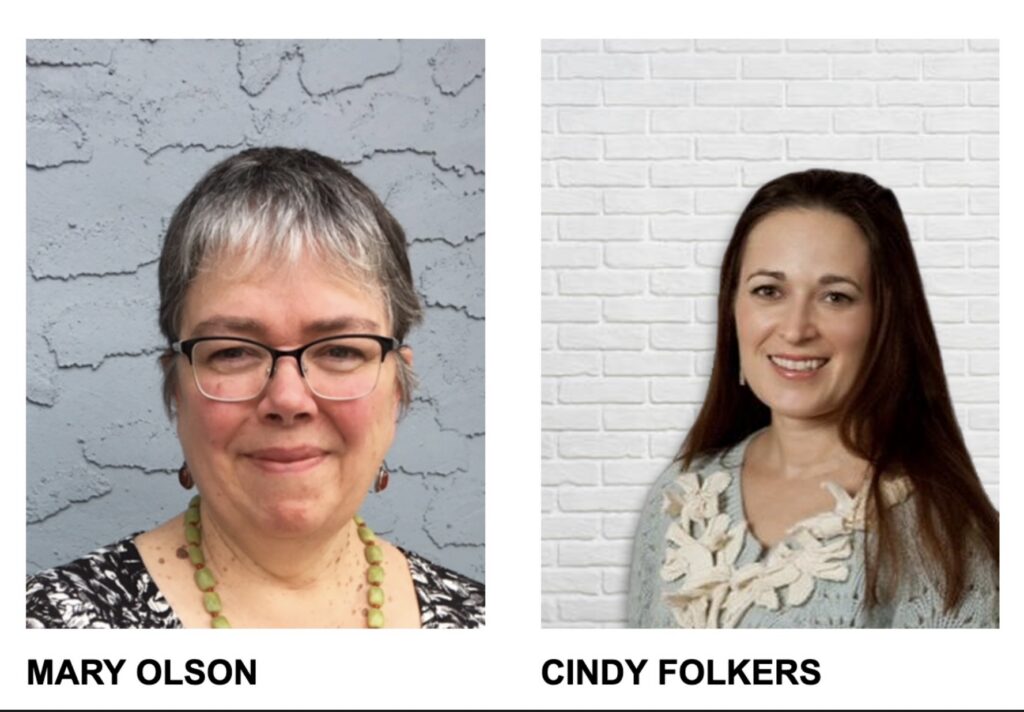
Cindy Folkers is radiation and health hazard specialist for Beyond Nuclear. Since joining the group at its founding in 2007, she has focused on ionizing radiation and its impact on health and the environment from both a scientific and historical perspective. Her most recent book, co-authored with Dr. Ian Fairlie, is The Scientists Who Alerted Us to the Dangers of Radiation.
Mary Olson is the founder and CEO of Generational [00:15:00] Radiation Impact Project, or GRIP. Olson's degree is in evolutionary biology, and her work since the early 1980s has been centered on better protection for people from the destructive impacts of ionizing radiation exposure, nuclear radiation, with a specific focus on the disproportionate dangers to women and little girls.
Between them, these women have more than 60 years of experience working on issues of radiation exposure and what can be done to protect our health. Here we talk about their new science-driven educational resource, Atoms and Eve. I spoke with Mary Olson and Cindy Folkers on September 21st, 2026. Mary Olson and Cindy Folkers, thank you so much for joining me today on Nuclear Hotseat.
Mary Olson: Thrilled to be here.
Cindy Folkers: Yes, absolutely. Thank you so much.
Libbe HaLevy: You are currently working on a project called Atoms [00:16:00] and Eve, which you define as a new science-driven educational resource that explores how radiation harms female bodies more than male bodies, children more than adults, and pregnancy most of all. So let's start out with something really basic.
When you talk about radiation, what is it, where does it come from, and what does it do?
Mary Olson: Radiation is energy And it is either rays called gamma and also X-rays, which are energized light beams, or particles, one of which is so tiny it's the size of an electron called beta, and the other that is larger by thousands of times, but still the size of an atomic nucleus called alpha.
So alpha, beta, gamma, and the neutron is the biggest of all. And these are emitted, or ejected is [00:17:00] how I see it. They're actually shot out of the nucleus of a radioactive atom as it undergoes a step in its decay chain. So when uranium goes to thorium, it emits an alpha particle, and then it is not uranium anymore.
So radiation is a complicated story. It's natural. It occurs throughout our universe, and then human beings stepped in. So we'll talk about that when you're ready
Libbe HaLevy: Denny, do you have anything to add to that?
Cindy Folkers: Human beings decided that they wanted to split atoms, and they decided that they wanted to split atoms during World War II really for bomb-making purposes.
But even before then, they knew of natural radioactivity. And lots of people have heard of the radium dial painters, so we're starting to get into health impacts with the radium dial painters. Their health impacts were due to what [00:18:00] I call naturally radioactive but man-enhanced. And what I mean by man-enhanced is that was the radioactivity through radium and its decay product, radon, which is in the ground, and these all come from thorium and/or uranium, and it depends on, you know, what the parent-- what the precursor isotope was.
But they dug radium out of the ground, and the reason that they dug it out of the ground was because they wanted, again, for wartime, and World War I primarily really started to, to take off. They wanted to be able to paint watch and dial faces for wartime so that they could see them. They glowed in the dark.
But what they didn't tell the women at the time in their factories, and this can bring us into the thread of what it means to be a woman in the, quote unquote, "atomic age," these were oftentimes young girls in their teens, very young women in their late teens, early twenties, that were in these [00:19:00] factories, and they would lick the paint from the brushes.
It contained, like I said, radium. Radium would go into their bones, and they would get these horrible, horrible bone diseases. Their bones would disintegrate from inside their bodies. And the reason that I'm-- And a lot of them died, and they died horrible and excruciating deaths. But the scientists in the factories at the time, they knew of this issue.
And the reason why I'm bringing this up is because that sounds like it's a historic occurrence, but in many ways it's not a historic occurrence because females are more susceptible to radiation damage than are males of the same age for the same exposure. And we should have been very aware of the predatory nature of the radioisotopes and the way that they were being used in our industries.
And that has taken a back seat for a number of decades now, and it continues to take a back seat. [00:20:00]
Mary Olson: A watch and the little letters and numbers on the watch that had to glow meant that you had to have a very, very fine brush. So the reason the women were putting the brush in their lips was to make a teeny-tiny point to be able to paint those tiny, tiny numbers.
So the corporation hired them to do that. Maybe they didn't train them exactly to do that, but any woman who was already working there was doing it, and they didn't stop them, even though Cindy said they knew.
Cindy Folkers: And they were paid by piecework, which the incentive was to paint as many dial faces as possible.
They were not paid by the hour or any other kind of wage structure.
Libbe HaLevy: So radiation exposure has been a known danger since approximately World War I because of the radium dial painters, and that brings us to what do [00:21:00] people not understand about radiation and its dangers?
Mary Olson: I was raised during the Cold War. I was a little girl during the Bay of Pigs crisis between the United States and Russia.
And we had bomb drills, and we had fallout shelters. We knew that fallout was radioactive particles that would come down from the sky from the detonation of a nuclear weapon that might be close by, in which case we're in all terrible trouble, or it might be far, far away and still impact our bodies.
Because I already knew about the baby tooth study out of St. Louis where they were actually collecting teeth that had fallen out of children's mouths naturally, the baby tooth, and were finding radioactivity from atmospheric nuclear weapons tests in those teeth. It was an indicator that the radioactivity of the Cold War was in the bodies of the children of the United [00:22:00] States, and I knew that.
And so I have absolutely no doubt coming into my girlhood and adulthood that radiation is a hazard, that it can cause cancer. It doesn't always, but it can. And it, we now know, has a whole host of additional outcomes that radiation contributes to, including stroke, heart disease and heart attack, immune problems, endocrine problems.
There's a long list of thyroid dysfunction, additional illnesses because of the malfunction of our immune systems, a long list of dangers associated with radiation for the individual. And then for reproduction, the list gets even longer, and I think we'll get into that. But I know all that in me because of the historical period that I grew up.
And today, young people have all kinds of messages about radiation, very few of which come from [00:23:00] a reliable source like the president or their school principal calling a drill. It's Star Trek saying one thing and then another about radiation. It's getting your teeth X-rayed and maybe a CT scan with, you sign a paper but they don't tell you that there's any risk associated with it.
So most young people only hear about radiation and cancer in terms of radiation being a cure They don't hear that radiation can also cause that cancer, and that the survivors of cancer treatment are defined as five years because very often the cancer treatments actually cause a secondary cancer that may come after the five-year period of survival has happened.
So I feel it is incumbent upon me and my generation to help younger people understand solid information. I'm not here to tell them [00:24:00] they're gonna die from radiation. I'm telling them they need to live carefully in the atomic age.
Libbe HaLevy: Mary, you have been writing and lecturing about radiation's disproportionate harm to females, and Cindy touched on that briefly.
For those who may not have heard you expound upon this in previous Nuclear Hotseat interviews, explain what you mean when you say women are more vulnerable to radiation than men are.
Mary Olson: We're gonna start right there with that word vulnerable, because I made a promise to a dear friend that I would never use that word.
So I say men are more resistant. But you need to know that men are the source of at least 90 to 95% of everything we know about radiation and health impacts, because for a very long time, it was only military men and paramilitary atomic workers who were studied. And so therefore, in the broader study that my work is [00:25:00] rooted in, which is the survivors of the A-bombs that destroyed Hiroshima and Nagasaki in August of 1945, there were people of all ages impacted, and yet for the most part, for many decades, it was only the young adult male data that was looked at because it could be correlated with the atomic worker data from large studies of people in those factories.
So a lot of what we know about radiation is based on the male body, and we know that the male body is therefore harmed, because we have been studying cancers in those populations for decades. We know that men are harmed by radiation. But what came out after 2006 and the publication of 60 years of data from the Lifespan Study that was started in 1950 in- amongst the survivors of Hiroshima and Nagasaki, uh, known as the Hibakusha, the people who saw the bomb, who lived through it because they were shielded.[00:26:00]
That data set includes the exposure of people from birth, literally infants who survived that day, August 6, 1945, August 9, 1945, Hiroshima and Nagasaki. I always have to stop and pause and say I feel so incredibly sad and ashamed that my nation chose to do a first strike nuclear attack, and just say I personally am very sorry that that's the story that we're telling here, is the survival of those people and the outcomes of 60 years of time, which is what was published in 2006 and I started to look at.
So cut to the chase, Mary, it turns out that the exposure of children is far more damaging from the same type of radiation, the same exposure that they all shared on those days, damaged boys four times more than men and girls seven times more than women [00:27:00] But the big news is that although all children are more harmed than all adults, in the youngest age group, for every one male who got cancer over the following 60 years, and this is not just childhood cancer, this is lifetime 60 years counting cancer incidents.
So every one boy in that group, two girls got cancer in that same group. So it's a doubling of the outcome from the same exposure. And that doubling translates then to a situation where you compare the reference man that's used today by regulators in the United States and the youngest girl who is the most harmed of the post-birth group of the survivors.
You compare those two to each other, and there's a factor of seven times more cancer in women now because they've grown up across the 60 years. We're talking initial exposure [00:28:00] to a girl. Now we're talking across her 60-year lifespan. She's a woman. Seven times more cancer incidents than the young adult male that corresponds to the soldier, to the paramilitary guy that every bit of regulation in the United States is based on.
Seven times greater impacts
Libbe HaLevy: So females are more impacted by exposure to the exact same radiation levels as adult men, and children are
Mary Olson: There's seven times more cancer over a 60-year period in the female who was exposed as a young girl. So it's a little confusing. We're talking about a childhood exposure, but then we're following that individual over a 60-year period.
And in those 60 years, we're counting seven times more cancer than the young male who was exposed on the same day to a comparable exposure. You can do this when you have 100,000 people. You can do what's called slicing and [00:29:00] dicing and creating a scenario so that we're looking at apples to apples. So little girls to the guys who are basically the reference men, seven times more cancer across their entire 60-year life as they become women.
So this is interesting. It means women who are exposed young in our society today to relatively high levels, but not that high. I'm talking like a CT scan to a child results in this type of difference between that young girl and females who did not receive a childhood exposure at that level. So it makes it very impossible to talk about radiation as we do now as a population phenomenon, that there is an adult rate, that there is a child rate.
No. Is it a male child or a female child? If you have twins, they're both going in for the same CT, your female twin is going to have a risk factor twice what your male [00:30:00] twin has. Now, the next question, of course, is why? And I will tell you that nobody can answer that because nobody has invested in that question.
Libbe HaLevy: Now you and Cindy, Mary Olson, Cindy Folkers, have launched a new social media-based educational platform called Atoms and Eve. What is that?
Cindy Folkers: What we're hoping that Adams and Eve will be first and foremost a void filler, and the void that we want it to fill is the knowledge gap between will need to know about radiation exposure in all of its forms and what people currently know.
And so that's a, a huge chasm, or it can be. A part of the reason that radiation is so difficult to grasp is because a lot of the health impacts, especially at the lower doses, often don't show until a child that was exposed becomes an adult. And then you see, as Mary was [00:31:00] talking about, the cancer or the heart disease.
It comes later in life. The one thing that generally doesn't is childhood leukemia. Those can come fairly quickly upon exposure, especially during pregnancy. So that's why we like to say that pregnancy, as the science shows, is much more susceptible to radiation exposure. So the point of Adams and Eve is to introduce people to the concept of radiation and exposure, internal and external doses, just basic, basic questions like the ones that you were asking at the beginning, Libby.
And then if they want to delve deeper into the issue and discover more and learn more and more detail, they can do that at the site as well. So we're looking at the site as a sort of multi-tiered educational tool. We will be having posts on social media platforms like Facebook and Instagram and TikTok and all of that so that people can understand [00:32:00] in as little information as they want or in as great a detail as they would like, can educate themselves on exactly what radiation is, how it damages human beings, why certain people are more resistant than others, and that they can then educate themselves in a more complete fashion and not have to rely on what is increasingly becoming a society in the United States that is pulling back from protection of human health in all sorts of ways, not just in radiation.
But this is a way that people can find out information that is solid, science-based information, and not just old science, but any new science that might be coming down the pike. And they can look at this information, and they can be educated as to how they can protect themselves and how they can use this information then to go forth into society and [00:33:00] say, "Okay, this is what we want.
These are the decisions that we should make." So it's really for the general public, but it's also for people in positions of power, policymakers at the federal and state level
Libbe HaLevy: We'll continue our interview with Mary Olson and Cindy Folkers in just a moment. But first, when it comes to nuclear power, nuclear weapons, radioactive waste, uranium mining, and radiation exposure, finding information you can trust is difficult.
The nuclear industry has its public relations machine, government agencies have their talking points, and mainstream media too often gives these stories only a passing glance or misses them altogether. That's why Nuclear Hotseat is here. Every week, we bring you information, voices, and perspectives you're unlikely to hear anywhere else.
We follow the stories, ask the questions, and do it [00:34:00] independently, taking absolutely no money from the nuclear industry. But that level of independence is expensive. Nuclear Hotseat is a nonprofit, and listener donations are what keep this program going. So if you value having an independent source of nuclear information, if this program has ever taught you something, alerted you to something important, or simply reassured you that you're not the only one paying attention, please help with your support.
Go to nuclearhotseat.com and hit that donate button. Any amount helps, and a monthly donation, even five dollars a month, helps gives us the financial stability to keep showing up week after week. You can also donate through Zelle at info@nuclearhotseat.com. Nuclear Hotseat is a 501[c][3] nonprofit, so your donation is tax-deductible to the extent allowed by [00:35:00] law.
Because independent information doesn't just appear, someone has to do the work and make sure that the work can continue. So here's the deal. I'll continue to do the work, and you help make sure Nuclear Hotseat can keep doing it. Please donate today at nucularhotseat.com, and thank you for caring enough to keep this independent voice alive.
Now back to this week's featured interview with Mary Olson of Generational Radiation Impact Project and Cindy Folkers of Beyond Nuclear. How is this different from the other work and presentations you have done on this subject?
Mary Olson: Oh, I can tell you that right now. I have been a subscriber to Margaret Mead's beautiful statement, "Never doubt that a small group of people can change the world.
Indeed, it is the only thing that ever [00:36:00] has." And I suppose I should stop kidding myself. If we go to 10 or 100,000 times bigger, we're still a small group of people. So I guess I don't have to give up being a median, as I call myself. But a friend challenged me and Cindy to reaching beyond our immediate small group, our community, our colleagues, the ways in which we have worked as insiders inside the nuclear establishment, et cetera.
It's not that we haven't done public work as well, but social media has been a frontier that we have not tapped, and our friend was laying down the glove saying, "It's time for you two to s- to head on out there." And it's really been exciting. We're not quite there yet, but in the last year we said, "Okay We're gonna do it.
And so the first thing we wanted was something people could relate to. I mean, it's about reaching past the, excuse me, but the nerd [00:37:00] class, right? We're trying to get people who are just new to these questions and ideas. And so we decided we needed help to come up with a name.
Cindy Folkers: When I heard and saw the words atoms, that's A-T-O-M-S, and Eve, and I thought, well, you know, this is really, really a, a perfect culmination of both the science and something that is catchy.
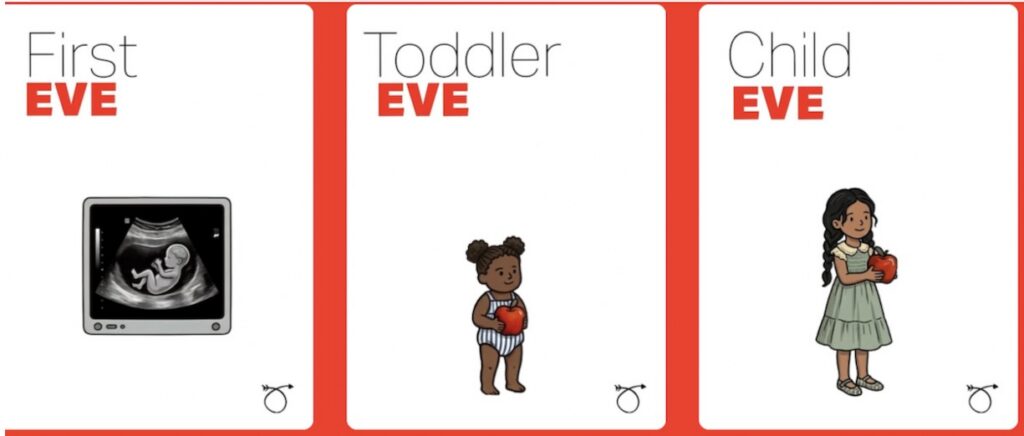
And so we wanted it to be catchy in a sound sort of way, like ear, sound, what you hear. But we also want it to be catchy in a visual sort of way. And so that's what the Atoms & Eve website has done. We feel is it's given people sort of a visual hook, and it's given them a positive message. Our logo is a young lady, and she has in her hand an apple.
And then you take the bite of the apple is the knowledge of good and evil. And in this case, it's the knowledge of evil, of what radiation does to us, but it's also the knowledge of good and what we can do to push back. [00:38:00] The whole thing, just when I heard Atoms & Eve, it just clicked for me visually. It clicked for me from an audible standpoint.
It was perfect. I thought, well, we can go with this. So that's kind of how I feel about it. And hopefully it'll be an easy thing for people to grasp in order to enter a subject which is often conflated and confusing. And in some ways, I think the people who like these, the nuclear industries, they've sort of gotten away with having it be confusing and conflated, and we would like to demystify it on Atoms & Eve
Libbe HaLevy: What form is this program going to take?
Is it going to be something people have to read? Is it audio? Are you doing videos? Are there going to be animations? I mean, how do you envision this as being put across to people, and especially to being appealing to those people who have grown up teething on the internet and are used to a different style of communication than perhaps [00:39:00] those of us who are getting up there?
Mary Olson: This is gonna be different, Libby. If you go to Atoms, A-N-D, and Eve, E-V-E, atomsandeve.org, you will meet Eve, and she ain't nothing like anything I've put out before, and I love the fact that we are adopting an icon, not a particular image. And I love that she's deep time. I am not Judeo or Christian in my own upbringing or background or current cosmology, but Eve stands as a deep time signifier of the female in mythology, in society, in activity, in personal relations.
I mean, she is just a really complex but deep time, and that is so important, because radioactivity that we are [00:40:00] focusing on and teaching about, that's one of the pieces that takes people the longest to understand, is that we have changed Earth with the amount of fission products that have been generated on this planet since 1942.
And that 1942 decision was secret, and here we are today with a whole lot of new decisions about more fission that aren't secret, and people need to understand. They need to have the empowerment to make sense of whether more fission is the right plan
Libbe HaLevy: So this brings us back to the question, what form is this going to take?
Oh,
Mary Olson: it's a website, but the website is gonna be hooked directly back and forth and back and forth as social media does to Instagram, to TikTok, to Facebook, to, I don't know which long forms we'll go into, but we will go into at least one long form. And we're gonna have a long form on our website, whether it's a [00:41:00] newsletter or a blog, we're still discussing.
Most of what is gonna flow is going to be reels where there's a composed image with meaning and message, and then maybe there's three of them or six of them or nine of them hooked together so that you swipe, swipe, swipe, and you can see all this. But at every point, there's the opportunity to go to the website, where you can then find a lot more in-depth information.
As a matter of fact, we've just done the life stages in Eves, and those life stages, even just on our current website that we're gonna be launching in the next four, six, eight weeks, it's already live at adamsandeve.org. There's a series of life stages that all of us who are Eve pass through these life stages.
And on the flip side is text about that life stage and radiation. And just that much text, eight little blops of [00:42:00] text, has a full page of citations that we are offering to back the information we are giving. So anybody who wants to take Adams and Eve into a debate setting, into a research setting, into a discussion at any level of science, they'll be able to.
But if they just like the little pictures, they're gonna get a lot of information just from the little pictures.
Libbe HaLevy: All of that is very important information, and it sounds like you've got it parsed out in an accessible way. However, to play angel's advocate here, young people today in particular are raised with very short attention spans when it comes to where they can put their attention and how long they can put their attention, and what grabs their attention.
So I'm wondering, what are the short-form means of communication that you may have developed or may be in the process of developing?
Cindy Folkers: So some of the short forms are, as Mary mentioned on the website, there are [00:43:00] flip cards. If you wanna go to one life stage of a female person, you can do that and you can get a fact off the back, and if that's all you want, that's great.
There will be connections between the website posts for TikTok, so that it's integrated that way. You can look at what's on TikTok in one panel and get a, a fact, or you can keep swiping and get more and more and more facts and drill down on the issue. It's very user-friendly, and it's very short or long, depending on how you want.
So these sort of little shorts, I'm gonna call them little short visuals, are visual, but they also have text that goes along with whatever the visual message is as well. And Mary and I are probably going to put on some short explainer videos. She and I taught classes on radiation together, and so we'll put on some of the long-form videos.
We can chop some of that information up and have it go, uh, in piecemeal, little short shot [00:44:00] videos, if you will, of information. And so that's gonna be a little down the road. We're still trying to get everything up and running, sort of stabilize everything, and it, it's gonna be an interactive thing where you can go back and forth from TikTok or whatever social media you're on back to the website.
You can share whatever you want. So the likes and the shares are gonna be important, and we're also hoping that other people look at this and say, "Wow, this is worth passing on." So, you know, we wanna collaborate with others to get the word out about this website, what it is, what it does, what its purpose is supposed to be, and just sort of get the information out, even in little teeny snippets.
It's really important to hone the message so that it's easily understandable, easily digestible, and gets rid of some of the nerd speak that I think has haunted this, for good and ill-
Libbe HaLevy: I've been undergoing much of the same process because I'm working with a team now on Nuclear Hotseat. We're upgrading the [00:45:00] website, and one of the things that has been up for discussion is doing short videos.
Our definition of short is one minute or less, because that's like the attention span that is available to us, and how do we hone that down and make that make sense but still have fidelity to the facts? And it's not easy for those of us who know more than a little bit. It's like, what's the smallest piece we can possibly make this into?
So as you're moving forward, is this a project primarily of the two of you? Do you have support staff? Do you have a team working on this?
Mary Olson: I'm forecasting a third to half my time next year related to this, and into outcomes associated with it. Been very glad to have partners. We had Lori Mirnov from Right Think help us with naming.
We have Vanessa Bell, who's our web construction person, and when you go to adamsandeve.org, you'll see [00:46:00] her incredible design work, but then populated by the Eve figures that all but the logo come from Mocha Media, and L- Lisa Smithline working with her team to create these incredible visuals, which, you know, we really want Eve to be understood as every girl, every woman And so we're trying to be inclusive, show diversity, and therefore because Cindy and I are not that diverse, we'll probably be looking for partners who can help broaden out what and how we say over time.
But at the moment, we're the ones carrying this ball, and so we're very pleased to have had the incredible help that we've had from these various contractors. I don't know if we'll decide to bring it in-house, but Beyond Nuclear is Cindy's home, and Generational Radiation Impact Project is my home. And right now the website [00:47:00] is clearly attributed to those two organizations working together, which reflects the fact that it's been five years since Cindy and I decided we needed to really coordinate in our work.
Because she published a paper in 2021 that had virtually the same title as a paper I also had published. They're very different papers. I'm not saying that we wrote the same thing. But given the same title, I called her up and I said, "Cindy, let's work together." And it's, you know, it's built on a long connection that we've had and a lot of respect that we have felt for each other, so it didn't come out of the blue.
But this project now is, I think, one of the biggest things we've undertaken. We also have a second project called Reference Girl, but it's much more complex and is gonna require institutions far greater than Beyond Nuclear and Generational Radiation Impact Project to be able [00:48:00] to deliver it. So we're not stepping out of Reference Girl, but we're definitely stepping in to Adams and Eve.
Libbe HaLevy: You talked about this in your materials as being a soft launch of the program, which I think you made clear by saying that, "Oh, we've got these pieces here, but then there are gonna be that piece, and the next one, and the ones after that." What can people do now to engage with the platform and be in line to get updates from you or follow what it is that you're doing?
Mary Olson: We have a sign up at Atoms and Eve. That is A-T-O-M-S-A-N-D-E-V-E. Atoms, not the guy, the little things with the electrons going around, with the nucleus, okay? AtomsandEve.org. There's a sign up page, and that will put folks on a list. But we also have a web form for communicating, email style, but off the website, and we would [00:49:00] love to hear from anyone who's feeling inspired to join us in this soft launch to help take things that we're posting and share them immediately and get involved in the kind of back and forth that gives life on social media, the kind of dialogue and question, and even pestering.
You know? We need to pester each other out there. That's what people do on social media. We would love to hear from people, and they can either know our emails already or go to atomsandeve.org and communicate that way on the contact page
Libbe HaLevy: Is there anything we haven't covered that you'd like to add at this time?
Cindy?
Cindy Folkers: I mean, I really think that this whole thing, the Adams and Eve website and the project was born out of a necessity to make sure that we are upholding our end of the bargain to communicate the dangers that radioactivity and legacy radioactive pollution. I mean, that is what we're dealing with is [00:50:00] radioactive pollution, and the, the dangers that it still poses.
All of those above ground bomb tests, you know, we talked about earlier, Mary talked about Hiroshima and Nagasaki, and the bombs that were dropped on living beings. Well, yes, they were, but then we continued to drop bombs in places where they just, it released the radioactivity, which became radioactive pollution, and we are still dealing with that legacy contamination.
So even if we never released another atom of radioactivity or another radionuclide into the environment, we would have to deal with the exposures and the health fallout from the pollution that we've already released, the radioactive pollution, and not just from bombs, but from the catastrophic releases from civilian reactors and civilian uranium mines, et cetera.
So this Adams and Eve project needs to have long [00:51:00] multi-generational legs, not just ones that look back, but ones that move us forward with a cadre of individuals that understand, be it a little or be it in depth, what this issue is, what it means for future generations, and how we can move forward in a way that recognizes the damage already done and that starts to prevent more damage from being done.
That is one of the reasons why we started Adams and Eve as an educational project. It's not just to have people learn things, although that's very good, but it is also to have a cadre of people move us forward with that knowledge to try and protect against radiation exposure in the future.
Mary Olson: And that is so timely when data centers are cropping up all over the place, and people are saying that nuclear is the way to power those data centers without understanding that if one is worried about climate, nuclear [00:52:00] takes longer, costs more, and doesn't work when the water is getting hot.
Whereas solar and wind and geothermal do not depend on making more radioactive waste, exposing more workers, exposing more frontline communities, or saddling us with that waste forevermore, and don't even need the steam cycle, which is the big Achilles' heel of all of the current extractive energy out there.
So we are going to be very happy to start creating younger people who are ready to say, "We have better choices." That's the answer. We have better choices.
Libbe HaLevy: Mary Olson and Cindy Folkers, it's always inspirational, educational, and a little bit mind-boggling to talk with the two of you and gain this information.
We will, of course, have the links up to Atoms and Eve on the [00:53:00] website, nuclearhotseat.com, under this episode. And for now, I want to thank you so much for coming on board and being my guests this week on Nuclear Hotseat.
Mary Olson: Thank you.
Cindy Folkers: Thank you.
Libbe HaLevy: That was Mary Olson of Generational Radiation Impact Project and Cindy Folkers of Beyond Nuclear.
Their new program, Atoms and Eve, is in the middle of a soft launch as they roll out its many features. But you don't have to wait. You can access it now through the website atomsandeve.org. That's A-T-O-M-S-A-N-D-E-V-E.org. Be sure to check out the interactive flip cards on the different ages and stages of Eve. The information is brief, to the point, easy to understand, and kind of fun.
Activist Shoutout: [00:54:00] Activists' shoutouts.
Libbe HaLevy: This is short notice, but September 26th has been established by the United Nations General Assembly as the International Day for the Total Elimination of Nuclear Weapons, otherwise known as Nuclear Abolition Day. In support of this is a global online event for nuclear abolition set to run September 25th and 26th, 2026, in four sessions to suit all time zones.
The events will include short presentations by experts from around the world, special screenings of the 29-minute documentary An Ordinary Insanity, discussion of the principal calls made in the Joint Appeal for Nuclear Abolition Day, examples of social media action, Stop Nuclear Weapons Peace Is in Our Hands, and there will be cultural performances for peace and nuclear abolition.
You can find out more and sign up for [00:55:00] watching the sessions on the website nuclearabolitionday.org. The Clamshell Alliance has put out an alert to a September 30th event taking place where the New England Governors Conference is going to hold a pro-nuke summit at UMass in Lowell. It's been convened by Massachusetts Governor Healey, and it is being touted as someplace where, quote, "The public can learn more about advanced," that's a propaganda word, "advanced nuclear energy, safety," that's a joke, "and regional benefits."
That's a joke. The nonviolent protest demonstrators will be gathering at the Meehan Student Center, 100 Meehan Way in Lowell, Massachusetts. We'll have a link up where you can register for this and other actions on our website, nuclearhotseat.com, under this episode, number 796. And there is a great interview with [00:56:00] Norbert Cuchenek of the International Uranium Film Festival in the CB Herald, which is the Columbia Basin in Washington's newspaper.
He talks about the history of the festival, its aims, and what it is doing to come back to the United States in 2027. We'll have the link up, of course. And speaking of films, there's a 15-minute one up on YouTube right now about a nuclear accident that left a man too radioactive to bury, and is an incident that I had never heard of before looking at this video.
It took place at the SL1 reactor in Idaho's National Reactor Testing Station in 1961, and could have been an accident, a mistake, or a murder-suicide. Something for Hollywood to look into the next time you want to do an interesting nuclear story. The video is posted on our website as are links to all of these activist shout-out moments.
It's episode number 796. [00:57:00] This has been Nuclear Hotseat for Tuesday, September 22nd, 2026. You can sign up to get Nuclear Hotseat delivered via email every week as soon as it posts by going to nuclearhotseat.com and fill in the opt-in box. We won't bug you or give away your information. We'll just get you one email a week with a link to that week's show and a short description of its content.
Now, if you have a story lead, a hot tip, or a suggestion of someone to interview, send that information to us in an email at info@nuclearhotseat.com. And remember always, if you can go to Nuclear Hotseat and donate, thank you. Any amount will help us out, and we really appreciate your support so that we can keep doing this show.
This episode of Nuclear Hotseat is copyright 2026 Libbe HaLevy and Nuclear Hotseat. All rights reserved, but fair use allowed as long as you [00:58:00] cite the program, website, names of any guests whose comments you use, and me. For now, this is Libbe HaLevy of Nuclear Hotseat reminding you, ignoring the impact of nuclear radiation on our lives and health doesn't change the scientific fact of the harm it is doing to us.
It just keeps us trapped in ignorance and danger as we continue to get sicker and wonder why. There you have it, your weekly nuclear wakeup call. So whatever you do, please don't go back to sleep because we are all in the Nuclear Hotseat.
Nuclear Hotseat. What are those people thinking? Nuclear Hotseat.
What have those boys been drinking? Nuclear Hotseat. The corium is sinking. Our time to act is shrinking, but our activists are linking.[00:59:00]
Nuclear Hotseat. It's da bomb.