Episode transcript
Nuclear Hotseat: Milestone Episode #800!
Highlights from First 15-1/2 Years
of Nuclear Hotseat w/Caldicott, Gundersen, Starr, Edwards, TPNW - MORE!
Libbe HaLevy: [00:00:00] Nuclear milestone. On June 14, 2011, only three months after the start of the Fukushima nuclear disaster, a woman unknown to any in the anti-nuclear movement announced that she was exploring whether to start a podcast on nuclear issues, and invited anyone on Facebook who was interested to dial in to a conference call.
Two people actually did, and when this woman said...
My name is Libbe HaLevy, , and we are talking on Tuesday, June 14th, 2011. And, uh, the purpose of this call is to discuss the nuclear issues that are going on in the world. Since Fukushima, on March 11th of this year, uh, I have been absorbed in what's going on, the information that's out there, the various ramifications it's having, the lack of information that is getting [00:01:00] to most people, and what it is that we need to do in order to maintain our health, maintain our sanity, and do something to turn around the nuclear situation so that we're no longer being, um, subjected to the dangers of having a dirty bomb in our backyard.
That's why I want to do this. I don't even know what this is, but I'm willing to hang out with the process, make it available, make it a little more visible next time around maybe, and, um, do my little bit to help raise people's awareness that we do not need to panic. We do need to act.
Well, I still don't necessarily know what this is, but today we hit episode number 800 of the ongoing exploration of that awful, deadly, dangerous seat that we all share.[00:02:00]
Nuclear Hotseat theme: Nuclear Hotseat. What are those people thinking? Nuclear Hotseat. What have those boys been drinking? Nuclear Hotseat. The corium is sinking. Our time to act is shrinking, but our activists are linking. Nuclear Hotseat. It's da bomb.
Libbe HaLevy: Welcome to Nuclear Hotseat, the weekly international news magazine keeping you up to date on all things nuclear from a different perspective. We're a show for people who know nothing about nuclear who want to know something, and people who know something who would like to know just a little bit more.
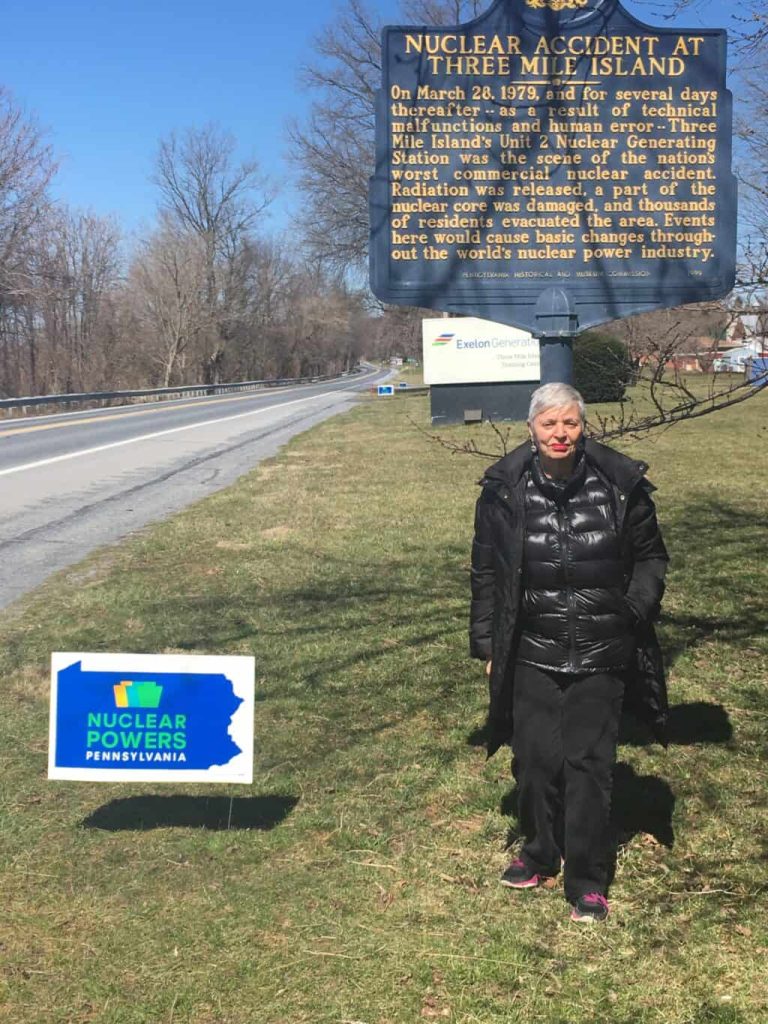
My name is Libbe HaLevy, . I am the producer and host, as well as a survivor of the nuclear accident at Three Mile Island from just one mile away, so [00:03:00] I know what can happen when those nuclear so-called experts get it wrong. This week, we celebrate a milestone, the 800th episode of Nuclear Hotseat. We take a look back at some of the highlights, startling revelations, major stories, and consider not only where we were, but where we are now and what's ahead as we expand Nuclear Hotseat to be more robust, user-friendly, and visible.
Today is Tuesday, October 27th, 2026, and here's this week's very special look at Nuclear Hotseat at 800, all of it nuclear news from a different perspective. You'd think that after having been one mile away from the nuclear accident at Three Mile Island when it happened, I would have jumped right into being an anti-nuclear activist.
Well, I tried, but it didn't work because I had too much post-traumatic stress from [00:04:00] the experience. I even ignored Chernobyl when it happened, figuring everybody's afraid of nuclear. I already know what it's like to be afraid of nuclear. I don't have to go there again. So I didn't. But then Fukushima happened.
Enough time had elapsed, and the internet kept us up to date on many, if not all, of the terrifying details as the story played out. Three months later, while on an off-grid camping trip to mourn, pray, journal, and cry, I got an impulse which came like a voice in my right ear saying, "You will do your first podcast this Tuesday I never planned on doing a podcast.
I am neither clairaudient nor schizophrenic, so I don't walk around hearing voices, but there it was. And after some argument, that voice came back and said, "If you don't do your first podcast this Tuesday, you will always regret it." I live my [00:05:00] life not to have regrets, so the following Tuesday, I did my conference call and signed off saying, "Well, I'll keep doing this for as long as there might be a need."
And here we are. I reached out to the people I saw posting on Facebook and tried to secure people to interview. One of my early successes was an interview with John Solomon, vice president of purchasing from Eden Foods, a company which specializes in organic macrobiotic foods, much of which is sourced from Japan.
I tracked him down for Nuclear Hotseat number seven from July 26th, 2011, to find out what his company had done to determine the safety of foods imported from Japan in the immediate aftermath of Fukushima.
Jon Solomon: The hardest thing to acquire was information first, and getting through all of the, the tragedy was, was, uh, was the first part.
You know, a lot of the suppliers we were dealing with [00:06:00] died. And trying to acquire information from these suppliers and what was happening was second. And then trying to acquire information from, uh, governmental agencies in, in North America was, was, uh, was number three. None of the agencies was very forthcoming on what to do and how to do it, and that was when my department realized we, we have to create this ourselves, and we have to really address every variable that could, uh, affect our food.
Eden Foods bought their own radiation monitors and checked containers, packaging, and contents to find out not just about the food, but to judge worker safety. However, finding a lab to test the food itself for radiation proved much more difficult.
There were labs in- Canada, but the labs would not accept the product coming into the country, 'cause it had not been tested yet, which was kind of funny.[00:07:00]
Libbe HaLevy: So they couldn't do the tests because you hadn't tested it. What, if anything, has the FDA been doing in all of this?
Jon Solomon: FDA has been coming in periodically when we receive containers, and they will put the container on hold, and they will visit our warehouses, and they will scan the product.
Libbe HaLevy: Mm-hmm.
Jon Solomon: And I can tell you, the FDA did not seem as if they were prepared for this tragedy.
One of the first visits out to our warehouse, uh, one of the FDA agents said, "Boy, your, uh, your radionuclide detector is a lot better than ours," and they had trouble getting theirs started, and, and figuring out how to work it.
Libbe HaLevy: John Solomon, vice president of purchasing for Eden Foods, as recorded for Nuclear Hotseat number seven, July 26th, 2011, only four months
after the Fukushima disaster began.
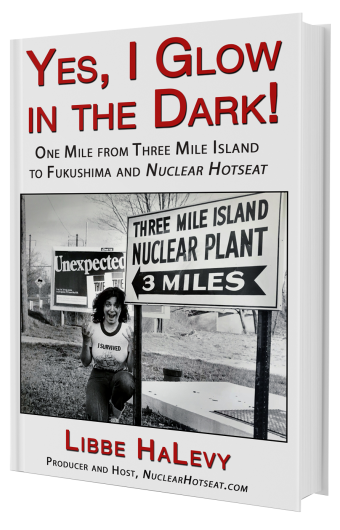
As I state at the beginning of each episode, I was only one mile away from the [00:08:00] nuclear accident at Three Mile Island when it happened, and the impact on me was devastating. I tell the full story in my book, Yes, I Glow in the Dark, in my play, Atomic Bill and the Payment Due, and in the Three Mile Island 40th anniversary episode, number 666.
Still reeling from the experience when I returned to Los Angeles, I went to see my editor at LA Weekly and hand in an article about what I had been experiencing. He handed me a copy of the previous week's newspaper, which featured an interview with a woman I had never heard of before, a Dr. Helen Caldicott.
In the interview, she was honest and direct about difficult nuclear truths that I hadn't encountered anywhere else. She particularly focused on the health impact of low-level radiation, with a timeline of how many years after exposure it would take before illnesses first showed up: [00:09:00] leukemia and thyroid cancer in three to five years, hard tumors in 12 to 15 years, and all kinds of cancers and other diseases ongoing from then on.
Her words, the most honest I encountered, though they were terribly frightening at the time, motivated me towards a healthier diet, holistic healers, supplementation, herbs, and much more that I now take for granted as my basic lifestyle. For those of us who oppose nuclear, I consider Dr. Caldicott the mother of us all.
Here are two brief excerpts from my interviews with Dr. Caldicott. In this first one, she responds to my question as to what activists need to do to up our game.
Dr. Helen Caldicott: I think that it's, it's imperative that people who are deeply concerned about all things nuclear learn as much as they can about the medical effects of radiation, the biological effects, and I have written two books [00:10:00] specifically in that area.
One is called Nuclear Power is Not the Answer by The New Press, and the other one is Nuclear Madness: What You Can Do by W.W. Norton. If you read those two books, you'll know more than anyone who's interviewing you. You'll know more than the people at the nuclear power stations or the NRC because they don't understand ra-radiobiology.
So once you're armed with the facts, then you'll know what you have to do. No one's ever told me what to do. I just kind of know as I learn more, and I do it
Libbe HaLevy: While attending Dr. Caldicott's 2012 symposium on the medical and ecological impacts of the Fukushima nuclear accident, I got to ask her a question that's been on a lot of people's minds.
Is there any place on Earth that is not yet polluted with radiation?
Helen Caldicott
Yes, much of the Southern Hemisphere is not, because the two air masses do not mix at the equator. However, the [00:11:00] ocean currents do, and a huge quantity of radiation, almost unimaginable, has been tipped into the ocean from Fukushima, and of course, fish swim thousands of miles, and ocean currents go from north to south.
So that's a problem. And we had British tests in Australia, too, which polluted some of Australia. Um, but we are much less polluted in the Southern Hemisphere than the Northern Hemisphere.
Libbe HaLevy
So if you would want to take a family someplace that would be safer and could get out of, say, the United States or any place in the Northern Hemisphere, what would you suggest?
Dr. Helen Caldicott: I'd go to Australia or South America.
Libbe HaLevy: Is there one question you've always wanted to be asked in an interview and haven't, or a response
you've wanted to give that you haven't had an opportunity to give yet?
Dr. Helen Caldicott: Why haven't we saved the Earth yet?
Libbe HaLevy: We'll hear more from Dr. Caldicott later in this episode. So what else could I learn about the impact of radiation that I might have suffered from?
One of the greatest sets of information I received was from [00:12:00] Mary Olsen. She is founder and CEO of Generational Radiation Impact Project, or GRIP. Olsen's degree is in evolutionary biology, and her work since the early 1980s has been centered on better protection for people from the destructive impacts of ionizing radiation exposure and nuclear radiation.
I've interviewed Mary numerous times for this show, most recently on a new program she has developed with Cindy Focus, radiation and health hazard specialist for Beyond Nuclear, called Atoms and Eve. But how has the standard for radiation exposure been set? How has it been determined? And what has it taken to learn what the true impact is on women and children, most specifically little girls?
I spoke with Mary Olsen most recently for Nuclear Hotseat number 795 from September 23rd, 2026. [00:13:00]
Mary Olson: For a very long time, it was only military men and paramilitary atomic workers who were studied. And so therefore, in the broader study that my work is rooted in, which is the survivors of the A-bombs that destroyed Hiroshima and Nagasaki in August of 1945, there were people of all ages impacted, and yet for the most part, for many decades, it was only the young adult male data that was looked at because it could be correlated with the atomic worker data from large studies of people in those factories.
So a lot of what we know about radiation is based on the male body, and we know that the male body is therefore harmed because we have been studying cancers in those populations for decades. We know that men are harmed by radiation. But what came out after 2006 and the publication of 60 years of data from the lifespan study that was started in [00:14:00] 1950 in- amongst the survivors of Hiroshima and Nagasaki, uh, known as the Hibakusha, the people who saw the bomb, who lived through it because they were shielded, that data set includes the exposure of people from birth, literally infants who survived that day, August 6, 1945, August 9, 1945, Hiroshima and Nagasaki.
It turns out that the exposure of children is far more damaging from the same type of radiation, the same exposure that they all shared on those days, damaged boys four times more than men and girls seven times more than women But the big news is that although all children are more harmed than all adults, in the youngest age group, for every one male who got cancer over the following 60 years, and this is not just childhood cancer, this is [00:15:00] lifetime 60 years counting cancer incidents.
So every one boy in that group, two girls got cancer in that same group. So it's a doubling of the outcome from the same exposure. And that doubling translates then to a situation where you compare the reference man that's used today by regulators in the United States and the youngest girl who is the most harmed of the post-birth group of the survivors.
You compare those two to each other, and there's a factor of seven times more cancer in women now because they've grown up across the 60 years. We're talking initial exposure to a girl. Now we're talking across her 60-year lifespan. She's a woman. Seven times more cancer incidents than the young adult male that corresponds to the soldier, to the paramilitary guy that every [00:16:00] bit of regulation in the United States is based on.
Seven times greater impacts.
Libbe HaLevy: Mary Olson of Generational Radiation Impact Project So how much radiation was I exposed to at Three Mile Island? Not an easy answer to get. The best information I received came from Arnie Gundersen. He is an independent consultant with fifty-five years in nuclear as a licensed reactor operator, former vice president whistleblower, expert witness, and author who has been a consulting expert on many nuclear reactor issues.
Here he spoke about radiation levels and why the readings were so difficult after Three Mile Island. This is an excerpt from a press conference speech given by Arnie in the rotunda of the Pennsylvania State House for TMI's fortieth anniversary.
Arnie Gundersen: How much radiation was released? And [00:17:00] the answer is nobody knows.
And the reason for that is that every single radiation detector in every single vent that left the plant was pegged. That when they built Three Mile Island, they really wanted to detect the low levels of radiation that would be released, and they put all low-level radiation detectors in the stack and in all the ventilation systems.
But when the disaster happened, all of those went off scale high. So nobody measured what went out of Three Mile Island. So at best, scientists like me have to calculate based on what we know was measured out in the environment. The NRC on their website, very shortly after the nuclear disaster at TMI, came out with ten million curies.
Curies is a measure of radiation, and a curie is thirty-seven billion disintegrations per second. So [00:18:00] thirty-seven billion times ten million is what the NRC said. And, um, I'll, I'll submit as part of this presentation that that's incredibly low Most of the measurements were made by driving a car around through the local neighborhoods and out into the, the hillsides, and also from helicopters.
And you'll look in my press packet, and I have two quotes from a senior guy at the NRC, a guy named John Collins. And, and John said that at best, the car is iffy, and he didn't trust the helicopter data at all. So if you think about it, a helicopter takes, takes pure air from above and pushes that pure air down on the radiation detector below, diluting whatever the radiation levels were.
So the, the car data is suspect, and the helicopter data is useless. What I did was I plotted where the Nuclear Regulatory Commission looked on the first four days, [00:19:00] and I compared it to the peer-reviewed paper that Dr. Steve Wing wrote. Ten years ago, I, I met Steve Wing right here in the rotunda. Dr. Wing was an epidemiologist at, uh, UNC.
Two years ago, he passed. A wonderful scientist. And Steve showed that there was a dramatic increase in cancer along the Susquehanna River Valley. This is peer-reviewed stuff. This went through a rigorous scientific process. What happened in the Susquehanna River Valley was that during the first couple days of the disaster, there was a temperature inversion over the valley, and that kept the radiation moving up and down the river, but it didn't, uh, allow the radiation to move up into the hillsides as much.
So if you look at Steve's data, which is on these slides, but also in the material I gave you, and I'll have a, a PDF up on the Fairwinds website after I speak at Penn Central. But if [00:20:00] you look at that data, um, you'll see, uh, uh, a clear correlation to cancer, uh, increase versus where you lived in relation to the river valley
Libbe HaLevy: Arnie Gunderson.
On the second day of the Three Mile Island nuclear accident, I was walking outside alongside the Susquehanna River, breathing deeply of the Pennsylvania springtime air. So my later decision, based on not knowing how much radiation I'd been exposed to, my decision not to have children seems to have been justified.
But I didn't do Nuclear Hotseat just to find out what was going on in my life. There were so many stories of which I hadn't a clue. One of them was the Church Rock uranium tailings pond spill on Navajo Nation, which took place on July 16, 1979, in the U.S. state of New Mexico. This was only four months [00:21:00] after Three Mile Island, a 20-foot section of an earthen dam at the uranium tailings waste pool for United Nuclear Corporation's uranium mill in Church Rock, New Mexico, collapsed.
It released more than 94 million gallons of highly acidic water containing 1,100 tons of radioactive uranium waste material. The fluid and waste flowed into the adjacent Perky River, traveling 80 miles downstream past Sanders, Arizona, leaving a trail of radioactive contamination that has never been cleaned up.
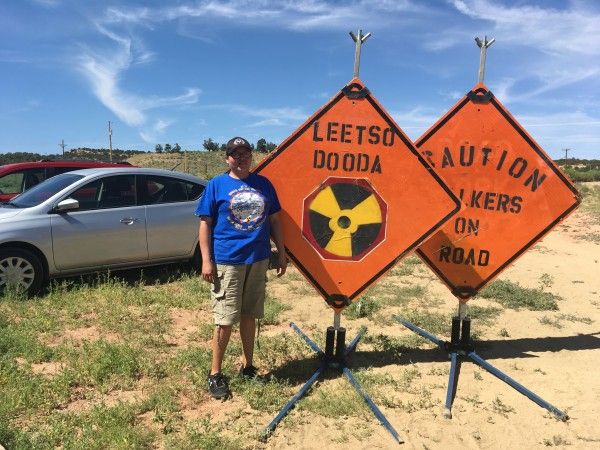
It remains the single largest release of radioactive material in U.S. history. Like most of us in America, I was completely unaware of the Church Rock disaster until I interviewed indigenous activists such as Leona Morgan, a Diné woman who spoke about it. I was fortunate to be able to travel to Church Rock, New Mexico in 2019 for the 40th anniversary of the uranium tailings [00:22:00] disaster.
I spoke with a miner who was on site the day that the accident happened, local residents who weren't informed of the deadly nature of what had just happened, people who lived in proximity with uranium mines as well as this catastrophe, those working on the resulting health problems, and the anniversary event itself, where I walked in community with those most affected up the road from Redwater Pond Road community to the site of the spill.
The full story of Church Rock is told on a special Nuclear Hotseat, number 423 from July 30th, 2019. Here is an excerpt, my interview with Teresita Kiyanna. She has lived her entire life in the Redwater Pond Road community and was not even born when the Church Rock uranium spill happened. But that did not stop her exposure to uranium mining waste by what was around her home and deposited by the spill.
I asked her what she had been told about the accident while [00:23:00] growing up.
Terracita Keyanna: Nothing. I wasn't aware of it. I didn't know much about it. As a child, I played in these abandoned uranium mills and mining areas, and my grandmother owned sheep, so sometimes I had to herd the sheep or get the sheep when they got onto the mining areas, the milling areas, and there was no fencing up, and so I just walked right in, got our sheep, came back through, got them back at home.
Nobody ever said, "You don't go in these areas. That's dangerous." Nothing like that.
Libbe HaLevy: The first visible signs of impact from the spill came from the livestock.
Terracita Keyanna: A sheep that had been butchered years ago, and the entire insides, the internal organs, all are tinted yellowish, [00:24:00] and that's due to the radiation.
Libbe HaLevy: The problems continue to this day.
Terracita Keyanna: EPA, they won't allow us to plant crops because we can't eat them. Can't keep our livestock. The reason why we have our livestock is because we utilize them as an economic way and also a cultural way. We don't just keep just to have, as white folks like to have horses and cows just to be there. We ut- like to utilize everything, so our sheep, we eat it.
The wool, we use it to create rugs.
Speaker: Through the years, the impact on her family's health has been extensive and devastating.
Terracita Keyanna: We have had cancers, respiratory illnesses. We've had some people pass away from respiratory illnesses, pulmonary fibrosis, COPD. So [00:25:00] basically, these people who have passed away from respiratory illnesses, we had to watch them suffocate to death.
And it was very traumatic, and it's something that we have to live and endure just because it's almost a norm here because of the radiation and the impact that the dust and the water and the land has done to our bodies, done to our community. You know, you hate to say it, but it's kind of just like environmental racism, where our community is somewhat seen as expendable.
You hate to say it, and you hate to feel that way, but that's how it feels for our entire community, that we are the expendable people because it took so long for anybody to acknowledge what was going on here.
Libbe HaLevy: Teresita Kiana of the Red [00:26:00] Water Pond Road community in Navajo Nation. One of my more memorable interviews was with Sister Megan Rice.
As an 82-year-old nun, she and two other senior citizens easily breached security at the Y-12 National Security Complex in Oak Ridge, Tennessee to conduct a non-violent demonstration against nuclear weapons called Transform Plowshares Now. Y-12 is considered one of the nation's most important national security assets, and the US was so embarrassed by this petite senior citizen's ability to outwit them and gain access that they upped their charges from misdemeanor trespass to felony counts, and sentenced her to just under three years in prison.
She was released after serving two years, and I was able to interview her shortly thereafter. This is from Nuclear Hotseat number 205 from May 26th, 2015.
You were initially charged [00:27:00] with misdemeanor trespass, and then suddenly the charges were upped to damaging a defense facility under the Sabotage Act, which carries a sentence of up to 20 years in prison.
And there was also the charge of causing more than $1,000 damage to government property, which carries up to 10 years in prison. Why do you think the charges against you were so dramatically increased in their severity?
Sr. Megan Rice: Obviously, they didn't want a trial. They thought we would try to get out easily with a plea bargain.
Speaker 25: Oh, was that the strategy?
Sr. Megan Rice: Up... Oh, absolutely. They always want plea bargains
Libbe HaLevy: Was there any question in your mind about taking the plea bargain or were you all along?
Sr. Megan Rice: No question, uh, no possibility of a question.
Speaker 25: And what did you hope to accomplish with the trial and the resulting visibility?
Sr. Megan Rice: To doing what we had to do.
It's the obligation of [00:28:00] every... We're all equally responsible to expose and oppose known crimes. So there was nothing else we could do but do it in order to make a very clear message quickly.
Libbe HaLevy: Sister Megan Rice. She passed away on October 10, 2021, at the age of 91. But she stays with us as my annual Christmas episode because her story is one of great hope and blatant love for humanity.
We'll have much more from the first 800 episodes of Nuclear Hotseat in just a moment. But first, this show doesn't happen by itself. It's been kept alive by the donation of listeners such as yourself. So where does that money go? On a monthly basis, to the services needed to process and post each episode, website hosting, database maintenance, emailing, and site security, [00:29:00] hiring personnel when the work needs to extend beyond my ability to figure out.
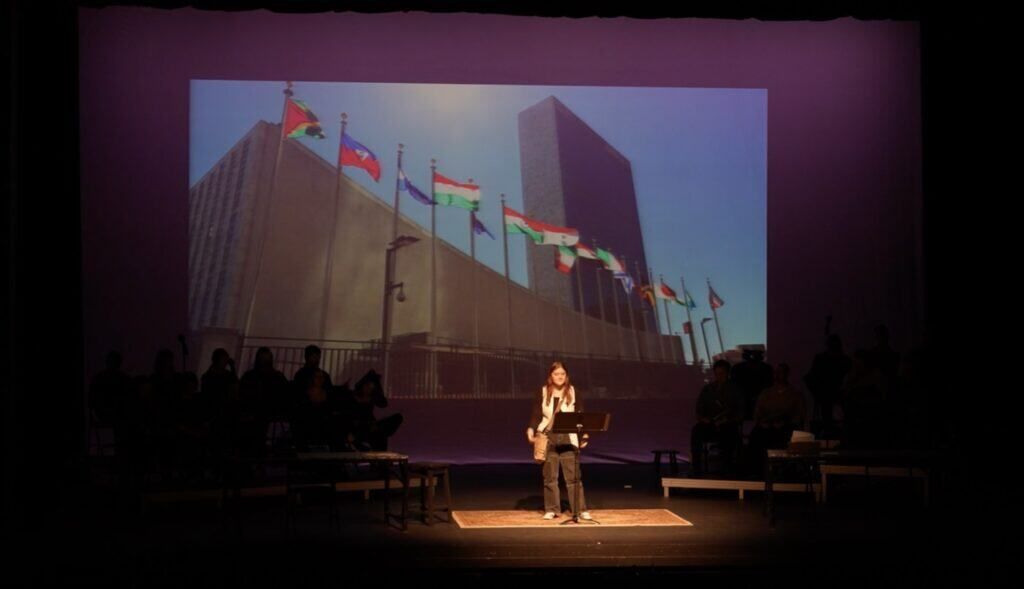
Then there's the expense of travel to cover events, the United Nations in New York for meetings of states' parties on the Treaty on the Prohibition of Nuclear Weapons, which I've attended in 2023 and 2025, and hope to be able to attend again this year as of December 2026. There's the International Uranium Film Festival, which I've attended in Rio de Janeiro, Quebec City, and Las Vegas, two anniversary commemorations of Three Mile Island, Pennsylvania, and the aforementioned Church Rock uranium tailing spill on Navajo Nation, and I've attended seminars on nuclear issues in New York, North St.
Louis, all around California, and beyond. All of this is to bring you upfront personal coverage of the important nuclear events that are taking place. See, when it comes to covering nuclear, the stories never end. [00:30:00] That's why Nuclear Hotseat is here. Every week, we bring you information, interviews, and perspectives you're unlikely to hear anywhere else.
We follow the stories with context and continuity, ask the questions. Sometimes we get to be funny, and the work that we do is independent of the nuclear industry. But that independence is expensive, and the ability to continue to provide this service depends on you. It's listener donations that keep this program going.
So if you value having an independent source of nuclear information, if this program has ever taught you something, alerted you to something important, or simply reassured you that you're not the only one paying attention, please help support us. Nuclear Hotseat is a 501 non-profit, so your donation is tax-deductible to the extent allowed by law.
We make it easy. Just go to nuclearhotseat.com and click on the red [00:31:00] Donate button. You can also donate through Zelle at info@nuclearhotseat.com. Any amount helps. A sustaining donation of even five dollars a month helps give us the financial stability to keep showing up week after week. And the time to help us is right now This is important because independent information on nuclear issues doesn't just appear by itself, and this is a way you can genuinely help keep this information flow going.
So please, help make sure Nuclear Hotseat can keep doing this work. Donate today at nuclearahotseat.com. And thank you for caring enough to keep this independent voice alive unto the next 800 episodes. In learning about nuclear dangers, there were some that I hadn't a clue about. One particularly revelatory interview was with Professor Stephen Starr.
He directed the Clinical Laboratory [00:32:00] Science Program at the University of Missouri in Columbia for 11 years until his retirement in 2021. He is an associate of the Nuclear Age Peace Foundation, and has been a board member and senior scientist with Physicians for Social Responsibility. Professor Starr has worked as an expert witness for Switzerland, New Zealand, and Chile at the UN offices in New York and Geneva.
And in 2010, he addressed the UN First Committee discussing environmental consequences of nuclear war, including nuclear winter and nuclear famine. Here, we discuss nuclear high-altitude electromagnetic pulse, or EMP, what it is, what causes it, and what it can do to us all. We spoke for Nuclear Hotseat number 626, June 21st, 2023.
Dr. Steven Starr: It's created by a high-altitude detonation of a nuclear weapon, beginning at about 19 miles up above the [00:33:00] Earth and up to hundreds of miles above that. There's no blast or thermal fire effects that are produced, but it creates a gigantic electromagnetic field or a pulse that will cover the entire continental of the United States.
And this would bring down most or all of the US national electric grid, and that would go for any national electric grid that hasn't been shielded from electromagnetic pulse.
Libbe HaLevy: How long would it take for it to have an effect on the grid?
Dr. Steven Starr: Well, it happens at the speed of light. And so in a few billionths of a second, these giant electromagnetic fields will strike the Earth, and they will induce these massive voltages and currents into any electrically conductive material.
In particular, the power lines and telecom lines can have up to two million volts for a medium distribution power line, which will create 5,000 to 10,000 amps in that line. And so anything that's plugged into the grid at that point, it's gonna get this [00:34:00] massive surge of electricity, and most modern electronic devices only operate at a few volts if they're solid state electronics.
So it's... If they're not shielded from this, they're gonna get cooked
Libbe HaLevy: What would the impact be in terms of the way we are used to conducting life right now in this portion of the 21st century?
Dr. Steven Starr: Well, everything depends on electricity in modern society. So if the grid is knocked out, and see, the grid will remain out for months or longer because of some of the components that are gonna be destroyed in it, but I can explain that a little later.
In the areas that are within, say, 70 to 100,000 square miles beneath the detonation, all the solid state electronics would be fried, and our critical national infrastructure relies on modern electronic devices to operate, so all the critical infrastructure in this affected area would cease to function.
And that would include ground, sea, rail, and air transportation [00:35:00] systems, fuel and food distribution systems, water and sanitation systems, telecommunication systems, financial systems, emergency services, about anything you can think of would just be knocked out almost instantly. Suddenly you would have no running water.
You would have no heating or cooling. You would n- not be able to get gas for your car because you wouldn't be able to deliver fuel. All the transportation systems would be knocked out. It would be like suddenly being transported back into the 18th century, only we really don't know how to survive in that environment.
All the, the food in the grocery stores relies... anything that's refrigerated would be ruined in a couple of days, and it, the stores usually only have three days' worth of food in them, so in that period, after that, there wouldn't be any food to get. I mean, it, it would be an, a utter nightmare. It'd be a catastrophic event.
Libbe HaLevy: I hate it when the preppers are proved right. Professor Steven Starr. His [00:36:00] book is Nuclear High-Altitude Electromagnetic Pulse: A Mortal Threat to the U.S. Power Grid and U.S. Nuclear Power Plants. A little light reading. Here in 2026, we continue to express concerns over uranium enrichment as regards Iran.
Are they capable of making a bomb? What do they need in order to do so? To learn more, I spoke with Dr. Gordon Edwards, head of the Canadian Coalition for Nuclear Responsibility. Here, he explains about different levels of uranium enrichment that could lead to a bomb, and how you don't need 90% enrichment in order to create something dangerous.
We spoke for Nuclear Hotseat number 731 from July 3rd, 2025.
Dr. Gordon Edwards: Uranium is the only material found on Earth naturally occurring that can be used to make an atomic bomb or to fuel a nuclear reactor. Without uranium, there would be no nuclear [00:37:00] weapons of any description, nor would there be any nuclear fission reactors.
But there's only one type of uranium that can be used for those two purposes, and that's called uranium-235 And when you mine uranium out of the earth, only seven atoms out of 1,000 are uranium-235. That's the so-called chain-reacting type of uranium. It's the uranium that can undergo a nuclear chain reaction to release untold power and destroy cities with a single bomb like we did at Hiroshima in August 6, 1945.
That was a uranium bomb. A single uranium bomb destroyed an entire city. Enrichment is simply the process of slowly and patiently increasing the percentage of the chain-reacting variety of uranium. And when it gets up to 90% of that chain-reacting type, then it's called weapons-grade uranium. Though many people make the mistake of thinking that just because it's [00:38:00] called weapons-grade uranium, that's what you need to make a weapon, 90% is what you need.
Not true. You can make a weapon with much lower degrees of enrichment. So the question is natural uranium with only seven atoms out of 1,000 that are explosive, you might say, it cannot be made into a bomb. You can't make it. There's too much dead weight. There's too much of the other type of uranium, which is called uranium-238.
That's non-chain reacting. It cannot be used to make a bomb, nor can you use it if you've got too much uranium-238 present. That means that you need to concentrate those chain-reacting uranium atoms into a much higher percentage in order to make a bomb or in order to fuel a nuclear reactor. Now, for a nuclear reactor, you only have to go up a little bit.
You can go up to 3% or 5% of the chain-reacting variety. That's a lot more than natural uranium has, and that can be [00:39:00] used as fuel for light water nuclear reactors as, uh, all of the power reactors in the States. If you go all the way up to 90%, that's called weapons-grade uranium, and that can be used to make beautiful, powerful atomic bombs that are enormously destructive.
I say beautiful only from the point of view of weaponers. However, it's a mistake to think that you need 90% enrichment to make an atomic bomb. In fact, the Hiroshima bomb used on the city of Hiroshima in 1945, it was a uranium bomb, and it was only enriched to about 80%. Iran has enriched about 400 kilograms of uranium up to the 60% level.
60% is more than enough to make a powerful atomic bomb. So if they wanted to, Iran could make atomic bombs with the uranium that they've already enriched. According to the International Atomic Energy Agency, you can make a bomb out of even [00:40:00] 20% enriched uranium, but it would be a very big device, a lot bigger than the s- the bomb that you could drop from an airplane.
You could, however, put such a bomb in the hull of a ship, sail it into the harbor, and let her rip. Or you could put it in a truck and cross the border and let her rip. Or you could put it even in the trunk of a car and detonate it by remote control. So as was said under the President Reagan's domain as presidency, we could wake up one day and find Washington, DC gone and not even know who did it.
So these bombs don't have to be delivered by missiles or by airplanes. They can be delivered by any method that one can think of for delivering an explosive device.
Libbe HaLevy: Dr. Gordon Edwards of the Canadian Coalition for Nuclear Responsibility. In one of the more heartbreaking stories to come out of Nuclear Hotseat, Dr.
Helen Caldicott told the story of how she spoke with Ronald Reagan [00:41:00] and came so very close to getting him to give up nukes forever. From Nuclear Hotseat number 749, November 5th, 2025. And it starts with her agent giving her advice on, on a speech she's about to deliver.
Dr. Helen Caldicott: My agent said, "Look, these are film stars.
You can be emotional tonight." Normally when I gave a speech to l- like 2,000 people, I'd have to be extremely scientific and establish my credentials, and only at the end could I go for their emotions and talk about how much do they love their children and smell a rose and the like. But this time I was quite emotional, and I said at the end, "Go out and look up at the stars tonight and realize that we're probably the only life in the universe."
Well, apparently Kris Kristofferson had collapsed in my arms weeping at the end of my talk. I can't remember that. But also this tall, skinny girl came up to me and said, [00:42:00] "I'm Patti Davis. I think you're the only person on earth who can convince my father about nuclear weapons," and she was Reagan's daughter.
"Will you see him?" I did a quick double take and I said, "I'll see him, but alone, without Meese, Baker, or Deaver." And so she rang me the next day and said, "We've got an hour at the when... end of his working day." And I said, "What time is that?" She said, "4:00," which alarmed me a little We had lunch, swept into the southern portico, went into the Lancer Library in which there was no, were no books.
He came in all dithery. He didn't know where to sit. I sh- shook his hand and said, "How do you do, Mr. Pres-..." So I show, showed him where to sit, and we talked for an hour and a quarter. Patty sat there, but I was alone with him. I had longer time with him alone than any other person during his presidency. He started off by, oh, I said, "I suppose, uh, you don't know who I am."
And he said, "Yes, you're an Australian. [00:43:00] You ran on the beach, and you're scared of nuclear war." And I said, "Yes." And he said, "I too am scared of nuclear war, but a ways to prevent it is to build more nuclear weapons." So we were off to a flying start. I'd just written my book, Missile Envy, and I had figures and facts just pouring out of me.
And so he'd get quite uptight when he'd make a, a remark, and I would correct him. So I ended up holding his hand, developing a doctor-patient relationship with him for about half the time, just reassuring him, teaching him. At the end, I thought, "Well, I, you know, I haven't had any influence at all." But after that, he started saying nuclear war must never be fought and can never be won.
I think it was partly the result of the film The Day After, partly the result of me. He mentioned me as his, in his autobiography, and Nancy Reagan was onto it too. And in the end, he and Gorbachev met in Reykjavik [00:44:00] for, in, in Iceland, and over a weekend, two mere mortals almost agreed to abolish nuclear weapons.
But they got stuck up on Star Wars, and Gorbachev should have said to Reagan, you know, "Yeah, have Star Wars," because he knew it wouldn't work. But they got stuck on Star Wars, and the whole thing fell apart. I remember Secretary of Defense Schultz came out from the meeting, and he said, "We did this, and we achieved that, and we achieved this."
And then his face fell, and then he said, "It didn't work." I later went to Reykjavik, and the people took me to that little house, and it was a little house. And they'd cleared the area for about a mile around, and there were men standing with guns all around to protect it. Reagan and Gorbachev met in one room, Shultz and Shevardnadze in the other room.
Upstairs was Richard Perle, the [00:45:00] Prince of Darkness who worked in the Pentagon. And so Reagan would run into Shultz and give him, talk about what had been proposed. Shultz would run up to Richard Perle in the bathroom who's writing numbers on lavatory paper, because he didn't have any paper. And then they'd come down, and downstairs were the KGB, and I don't know, I suppose they were drinking vodka, and someone threw a lighted match into the rubbish tin, and it caught fire, and they nearly burnt the whole place down.
I, I've got that story straight from the horse's mouth. Amazing, eh? Amazing.
Libbe HaLevy: Dr. Helen Caldicott. So we didn't get Reagan and Gorbachev to give up nukes back then, but that doesn't mean we have stopped trying to force the issue. The International Campaign to Abolish Nuclear Weapons, or ICAN, has been doing just that, proposing the Treaty on the Prohibition of Nuclear Weapons [00:46:00] and bringing it forth at the United Nations.
It would be the first legally binding international agreement to comprehensively prohibit nuclear weapons, with the ultimate goal being their total elimination. The treaty prohibits states from participating in any nuclear weapons-related activities, including development, testing, possession, stockpile, use, or threat of use of nuclear weapons.
After years of stalemate, the treaty passed the United Nations on September 20th, 2017, with 122 nations signing on. In the ensuing years, it has gone through the necessary processes to have been ratified by the more than 50 nations required for it to enter into force of law. But let's take it back to that exciting moment when the course of the future and of nuclear weapons changed forever.
We contacted Professor Heidi Hutner. She is a professor of [00:47:00] sustainability and English at Stony Brook University, and a scholar of nuclear and environmental history and eco-feminism.
Heidi directed the award-winning film Radioactive: The Women of Three Mile Island.
Heidi was present at the United Nations and in the room where it happened at the time of the vote.
We were able to speak with her less than one hour after passage. As you can hear from our shared energy and excitement, it was a memorable occasion.
Heidi Hutner: Heidi, where are you, and what just happened? Well, I'm at the UN in New York City, and a, an, a historic moment just happened. The United Nations just voted almost by consensus, one vote extension, one against, and all of the other 122 voted in favor of this treaty to prohibit the use of nuclear weapons and, and to move forward with getting rid of them.
Now, we know that, you know, the, the nine nuclear nations are not here, and they're not participating, but this is a tremendous moment because [00:48:00] it's saying the rest of the nations don't want this, don't wanna proceed with this, and so it's for truly moving forward with the abolition of nuclear weapons.
Libbe HaLevy: In reading about this, I have been in tears
Heidi Hutner: this morning.
Tears, tears. And tell me- Lots of tears. So, okay, so here was the moment. I was in there when it voted, when the, when the vote was announced and sealed, uh, officially, and people were cheering, crying, hugging. It was a really powerful moment. And I was right next to the two nuclear nuns, Carol Gilbert and Ardeth Platt, and they were the two nuns who went to jail in protest of nuclear weapons, and they were crying.
All the women from ICAN who have come from all over the world- Weeping ... and then Kathleen Sullivan, who from the Hi- Hibakusha stories, uh, Robert Kroonquist, who's also from Hibakusha, everyone was weeping. Many women from all over the world, and then Australia, Japan, India. There was an [00:49:00] amazing speech by the ambassador from South Africa, who spoke about this being the eve of Nelson Mandela Day, and how he is watching in this moment and weeping and so proud of this vote.
Libbe HaLevy: It is thrilling, even from a distance, to know what has happened, and that the history is here right in front of us right at this moment. What's the next step? What do we do to start implementing this around the world, including here in the United States, which has been, probably will be the last one to sign on?
Heidi Hutner: Right. So I think what this is saying is, look, we have the rest of the world in support of this, and for those of us who, who are active and advocates on behalf of the abolition of nuclear weapons, we can now use this as a tool to both divest from banks that invest in nuclear weaponry, that's a really big one, the divestment campaign, and get this message out on social media.
Everyone should be doing it. You've got plenty of opportunity now. [00:50:00] Uh, you have material to work with. You can go to the ICAN website. They're leaders internationally in promoting this, so there's lots of photographs and material there, and articles. I mean, get it out there. We know our president. We know these people.
Social media works, so use that. And write letters to your editor. You know, tell your congressmen and congresswomen and senators. Reinforce how important this is, and how we need to join with the rest of the world, and ab- abolish these horrific, horrific weapons.
Libbe HaLevy: Writer, producer, director, and professor Heidi Hutner from Nuclear Hotseat number 316, July 11, 2017.
One of the pleasures I have with the show is providing airtime to regular contributors, experts on different aspects of the nuclear issues who enrich the program with their perceptions, observations, anger, sarcasm, insights, and quite often, wit. The first to join us was Linda Pentz-Gunter. She [00:51:00] serves as Beyond Nuclear's international specialist, as well as its media and development director.
Prior to her work in anti-nuclear advocacy, she was a journalist for 20 years in print and broadcast, working for USA Network, Reuters, The Times UK, and other US and international outlets. Linda provides the Nuclear Hotseat hot story, her take on whatever nuclear story is currently rearing its ugly little head.
She joined the show on April 27th of 2022, and has never failed to regale us. Here in this week's hot story, Linda informs us that Trump is sending Saudi Arabia little nuclear bomb kits, and some in the Senate object.
Linda Pentz Gunter: On August 25th, President Trump sent his nuclear deal that would provide Saudi Arabia with Westinghouse nuclear power plants to the US Senate for consideration.
They read it, and at least on the Democratic side, and in the case of [00:52:00] two Republicans as well, they didn't like it. That's because it leaves the door far too wide open for uranium enrichment to happen inside Saudi Arabia. That makes the pathway to developing nuclear weapons far smoother. It's of course utterly insane that on the one hand Trump is trying to bomb the Iranian civil nuclear program into oblivion with a helping hand from fellow nuclear weapons power Israel, precisely to avoid Iran enriching uranium up to weapons grade and possibly making nuclear weapons.
And on the other, he is handing the Saudis the opportunity to do the exact same thing. Saudi Arabia is a US ally, maybe, but not necessarily always. Iran was a US ally once, and we gave them their start in nuclear power, and now look where we are. Senators Ed Markey and Jeff Merkley, co-chairs of the Bicameral Nuclear Weapons and Arms Control Working Group, have responded by drawing up a joint resolution of disapproval to [00:53:00] try to block the US-Saudi Arabia civilian nuclear agreement.
A vote is expected in the Senate after November 29, assuming we aren't still embroiled by then in some sort of post-election coup d'état after the Republicans lose big, assuming the elections go off at all, but that's another story for another program. "The US-Saudi nuclear deal is about megatons, not megawatts," said Markey in announcing the resolution.
Trump should not be sharing nuclear bomb technology with a nation that US intelligence says may want nuclear weapons. Even worse, the deal fails to meet the non-proliferation gold standard by allowing Saudi Arabia to enrich uranium, an essential step to producing a bomb, but not requiring the strongest international inspections, Markey continued.
This deal is the starting gun for a Middle East nuclear arms race. Congress must reject it. Given the Republican majority control of the Senate, the joint [00:54:00] resolution is unlikely to pass, but it's still an important statement to make out loud. Markey has been this route before. In 2008, he asked then Energy Secretary Samuel Bodman during the George W.
Bush administration why the US was considering selling nuclear power to Saudi Arabia. Everything he said then could be repeated today verbatim without an edit. Here's an excerpt. "But aren't you suspicious that the Saudis don't want a solar agreement? Saudi Arabia is the Saudi Arabia of solar. There it is.
It sits there as a desert with sun 12 months of a year, blistering hot. Why wouldn't this administration be suspicious that they are asking for a nuclear rather than solar power exchange in order to meet their long-term energy needs?" Of course, both that administration and this one know perfectly well why the Saudis want nuclear and not solar.
The US is effectively shipping little atomic bomb kits off to the [00:55:00] kingdom, even if they're sent in the guise of 1,000-megawatt Westinghouse AP1000 reactors. By the way, didn't the Saudis notice what a fiasco that was last time we built AP1000s here in the US in Georgia where they came in seven years late, more than double the budget, and raised Georgia's electricity rates to their highest ever in the state's history?
But would the Saudis actually pursue nuclear weapons? We already know the answer to that question. In a March 15, 2018 interview with CBS News, Saudi Crown Prince Mohammed bin Salman said, "Saudi Arabia does not want to acquire any nuclear bomb, but without a doubt, if Iran developed a nuclear bomb, we will follow suit as soon as possible."
The only saving grace here is Westinghouse's lamentably bad track record. It took the company 14 years to complete the two reactors in Georgia, so Saudi Arabia probably won't have its reactors any sooner than that. [00:56:00] By then, the world will be a very different place given the ravages of the climate crisis alone, assuming we make it that far.
And maybe well before then, we will have a different leadership in the White House that doesn't think it's making a perpetual appearance on Let's Make a Deal on steroids, but is actually interested in running the country responsibly. I'm Linda Pentz Gunter reporting for Nuclear Hotseat, and that's this week's hot story.
Libbe HaLevy: Linda Pentz Gunter's new book is No to Nuclear: Why Nuclear Power Destroys Lives, Derails Climate Progress, and Provokes War. But other than that, Mrs. Lincoln, what did you think of the play? Our other monthly commentators are Alistair Burnett. He is head of media for the International Campaign to Abolish Nuclear Weapons, or ICAN.
Alistair is a journalist and analyst with 25 years of experience in BBC News as editor of The World Tonight on BBC Radio 4, and before that, [00:57:00] editor of News Hour on BBC World Service. Alistair brings listeners the monthly ICAN update with news on the Treaty on the Prohibition of Nuclear Weapons and the worldwide campaign to ban the bomb.
Jack Cohen-Joppa, with his wife Felice, is the editor and coordinator of The Nuclear Resister, a newsletter that has networked the nonviolent resistance movement and shared inspiring stories since 1980. Jack's gentle, soothing voice brings Nuclear Hotseat listeners the Nuke Resister, tales from our shared history of resistance to nuclear dangers.
It's a monthly milk and cookies time to relax into stories about our heroes and the great work they have done. His intent, as he states at the close of every episode, is to help inspire our activism today And it is my great honor to announce that the newest commentator joining Nuclear Hotseat for a monthly feature [00:58:00] is Dr. Ira Helfand. He is a past president of International Physicians for Social Responsibility, IPPNW, which was awarded the 1985 Nobel Peace Prize. He's co-founder and past president of Physicians for Responsibility, the US affiliate of IPPNW, the author of prominent studies on the medical and environmental consequences of nuclear war, including the report Nuclear Famine: One Billion People at Risk, and has addressed international bodies such as the United Nations.
As of next month, November 2026, he will be joining us here on Nuclear Hotseat to provide a monthly update based on the work of Back from the Brink, a US grassroots coalition that focuses on abolishing nuclear weapons and reforming US nuclear policy. We will have more on Ira Helfand in the coming weeks.
One of my greatest joys in producing Nuclear Hotseat is that I have uncovered [00:59:00] stories that were otherwise not known. One of them is that of William L. Laurence, a New York Times science reporter who was embedded in the Manhattan Project, and it turns out was the source of almost all of the initial information we learned about the bombing of Hiroshima and Nagasaki, as well as the man who suppressed information about radiation at the dawn of the atomic age, which is part of why we know so little about it today.
A play I wrote as a result, Atomic Bill and the Payment Due, has now received two staged readings and is under consideration for a full production. That first staged reading, where I learned that, yes, the play did work, and it worked on the audience, took place at Wilmington College in Wilmington, Ohio, as a cornerstone of the fiftieth anniversary celebration of the Peace Resource Center, an internationally important [01:00:00] archive of information about the bombings of Hiroshima, Nagasaki, and other nuclear issues.
Here's the head of the Peace Resource Center, Tanya Mouse, explaining exactly why she chose my play to be presented in a 400-seat theater just the night before to help celebrate their 50th anniversary.
Tanya Maus: The Peace Resource Center is an archives of historical materials, but we're really interested in the arts and bringing the history to new audiences in a different way that will connect with them other than...
Although research and the scholarship is hugely important to our understanding of nuclear, finding other ways to connect with younger audiences and with different audiences is huge on our mind at the Peace Resource Center. And so when Libby talked to me about her play, I just thought it was such an exciting way to bring this history to a new group of people.
And I knew because of the work that Libby does, that this history would be informed, that it would be truthful, and that it would [01:01:00] be extremely well-researched. So I was really excited to see it come alive in theater. So I feel, you know, just so grateful that we were able to have the opportunity.
Libbe HaLevy: Then I spoke with Tara Liddy, who directed the staged reading, and asked her what it was like in the wake of the presentation.
Tara Lydy: You know, I think one of the best things is to hear people since last night say, "Oh, my gosh. I'm not a history person. I was so drawn into this production. I, I, I just couldn't get enough of it. I just wanted to hear more." I mean, even high school kids that came were saying, "I wasn't real sure what was happening in the beginning, and the more I heard, the more I got sucked in, and I wanted to know more."
And they learned so much in one night. I just can't help but think that they're researching today and trying to find out more.
Libbe HaLevy: And if you would like to find out [01:02:00] more about the play Atomic Bill and the Payment Due, help it find its way to its next stage reading or perhaps a full production, there is now a page dedicated to it on the website, nuclearhotseat.com, or you can contact me directly by sending an email to info@nuclearhotseat.com.
As you can probably tell, this barely skims the surface of the wealth of information available on the show. 800 episodes, 800 hours, more than 750 individual interviews, and a weekly telling of the nuclear tale from that all-important different perspective. As we move into whatever the future brings, the nuclear stories continue, and so the storytelling continues.
And for now, Nuclear Hotseat continues to bring you information every week. Each episode page includes links to enrichment material, books, articles, videos, webinars, the places where you can [01:03:00] choose to expand your understanding of whatever we're talking about that week. With our ongoing website revamp, we have made the archive much more accessible and searchable, added information on our contributors and behind-the-scenes team, have that Atomic Bill page, are launching a YouTube channel, and taking more extensive advantage of social media with a new series of Nuclear Hotseat info bombs, short talking points on various nuclear issues delivered with perhaps a bit more theatricality than I allow myself on the show.
The goal is to keep documenting what's going on, giving heart to activists, and doing what I envisioned in that first conference call podcast, raising awareness so that we do not panic, but we do act, and I invite you to join me. This has been Nuclear Hotseat number 800 on October 27, 2026. Go to [01:04:00] nuclearhotseat.com and sign up to get an email every week with a link to that week's show and a short description of its content.
That's also where you can donate to us, and we do appreciate anything you're able to send us to continue to support this work. For now, this is Libbe HaLevy, of Nuclear Hotseat, reminding you we have not yet determined the half-life of Nuclear Hotseat, so stay tuned and help us find out. That's it, your weekly nuclear wake-up call.
So whatever you do, don't go back to sleep because we are all in the Nuclear Hotseat.
Nuclear Hotseat theme: Nuclear Hotseat. What are those people thinking? Nuclear Hotseat. What have those boys been drinking? Nuclear Hotseat. The corium is sinking. Our time to act is shrinking, but our activists are linking.
[01:05:00] Nuclear Hotseat. It's da bomb