




NH #760: Supreme Court Nukes Petition Opposing NM Proposed Radioactive Waste Dump – Kevin Kamps + Why Greenland? Award-winning Film Explains the Background
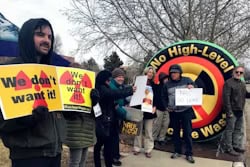
Demonstration in New Mexico against the High Level Radioactive Waste Dump
This Week’s Featured Interview:
- Last week, we learned that the US Supreme Court has refused to hear a petition by Beyond Nuclear to block the U.S. Nuclear Regulatory Commission’s (NRC) license approval for construction and operation of Holtec International’s highly radioactive waste consolidated interim storage facility (CISFs) targeting southeastern New Mexico.
Despite the federal court rulings, hard-won state laws in both New Mexico and Texas block the opening of these environmentally unjust CISFs, by prohibiting the issuance of state permits needed to break ground, unless the state consents. Still, the way to maintain this block to creating these nuclear waste dumps has been made more difficult, and an outcome that supports and maintains the current situation is not guaranteed.
To learn more, we spoke with Kevin Kamps, Radioactive Waste Watchdog – some of us think its more like bulldog – with Beyond Nuclear. He’s a veteran of this battle, knows where all the nuclear bodies are buried, and keeps trying to bury more of them… metaphorically speaking, of course. - We spoke with Kevin Kamps on January 16, 2026
Award-Winning Greenland Film on Uranium Mining/Rare Earth Battle – Kuannersuit / Kvanefjeld
Kvanefjeld mountain; site of one of the richest rare earth mineral resources deposits in the world.
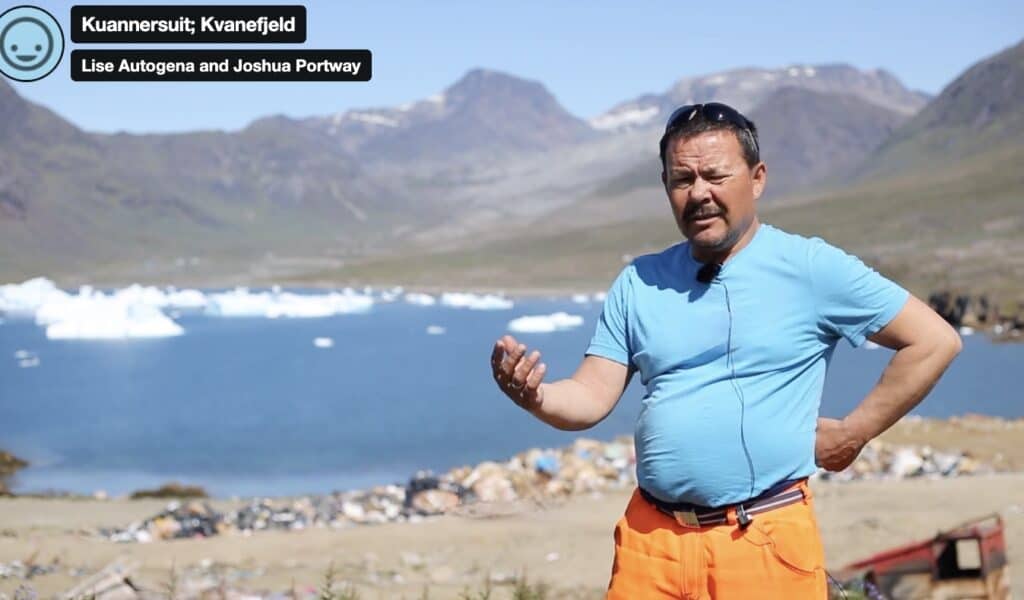
- Professor Lise Autogena and Joshua Portway made the 2017 film Kuannersuit / Kvanefjeld, exploring the divisive debate over a proposed uranium and rare earth mine at Kvanefjeld mountain in Narsaq, Greenland, highlighting the conflict between potential economic independence and threats to traditional farming and culture, with the film acting as part of a larger art project to encourage dialogue on nuclear and mining impacts in the indigenous community.
Narsaq is located next to the pristine Kvanefjeld mountain (above0; site of one of the richest rare earth mineral resources deposits in the world, and one of the largest sources of uranium. For generations the farming near Kvanefjeld has been Greenland’s only agricultural industry. At the time the film was made, this way of life was in danger of being threatened, as Greenland considered foreign investments in an open pit mine that could become the fifth-largest uranium mine and second-biggest rare earth extraction operation in the world.
Autogena and Portway’s film portrays a community divided on the issue of uranium mining. It explores the difficult decisions and trade-offs faced by a culture seeking to escape a colonial past and define its own identity in a globalised wdorld. While this film was released ten years ago, it is one of the few resources we have for actually hearing from the residents of that country, what they valuem and the threats their mineral resources have already put them through. While the dangers expressed specificallty in this film have passed, current events are bringing it back into play.
Audio is from the 2018 International Uranium Film Festival, with co-director Lise Autogena reading a letter from a Greenlander. Pardon the sound quality.)
Nuclear Hotseat Hot Story with Linda Pentz Gunter
Even worse news at the Nuclear Regulatory Commission as environmental oversight is set to be weakened.
Numnutz of the Week (For Outstanding Nuclear Boneheadedness)
A chain is only as strong as its weakest link.
Military personnel at an Army base in Alaska responsible for protecting the U.S. homeland from nuclear missile attack has struggled to feed its soldiers in recent months. Troops at Alaska’s Fort Greely – which controls 40 of this country’s 44 specialized missiles designed to shoot down nuclear missiles targetting the United States. – are getting shorted on food! Why? Because of the Trump administration’s efforts to shrink the federal workforce,. Nuclear deterrance on an empty stomach/. low blood sugar? The Grumpies/. Sheesh!